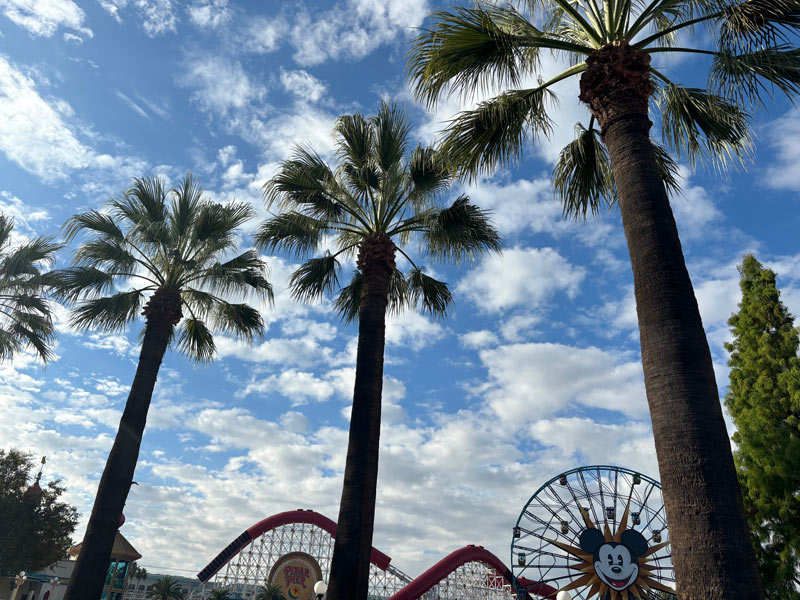
Disagree if you must, but palms are basically the supermodels of the plant world. They’re tall, dramatic, and typically camera-ready. While palms paint the stereotypical backdrop of Southern California, only one is actually a true native star: the California fan palm (Washingtonia filifera). This iconic tree is more than just a pretty silhouette—it’s a living symbol of California’s natural history, resilience, and desert beauty.
In San Diego, the California fan palm holds a special place in both residential and commercial landscapes. Whether growing near canyons, parks, or historic properties, these palms add character, shade, and a timeless Southern California vibe. In this article, we’ll explore everything from its history and unique features to fun facts and how it differs from its close cousin, the Mexican fan palm. So, whether you have one towering over your driveway or you simply admire them on your evening walk, let’s take a closer look at this one-of-a-kind California original.
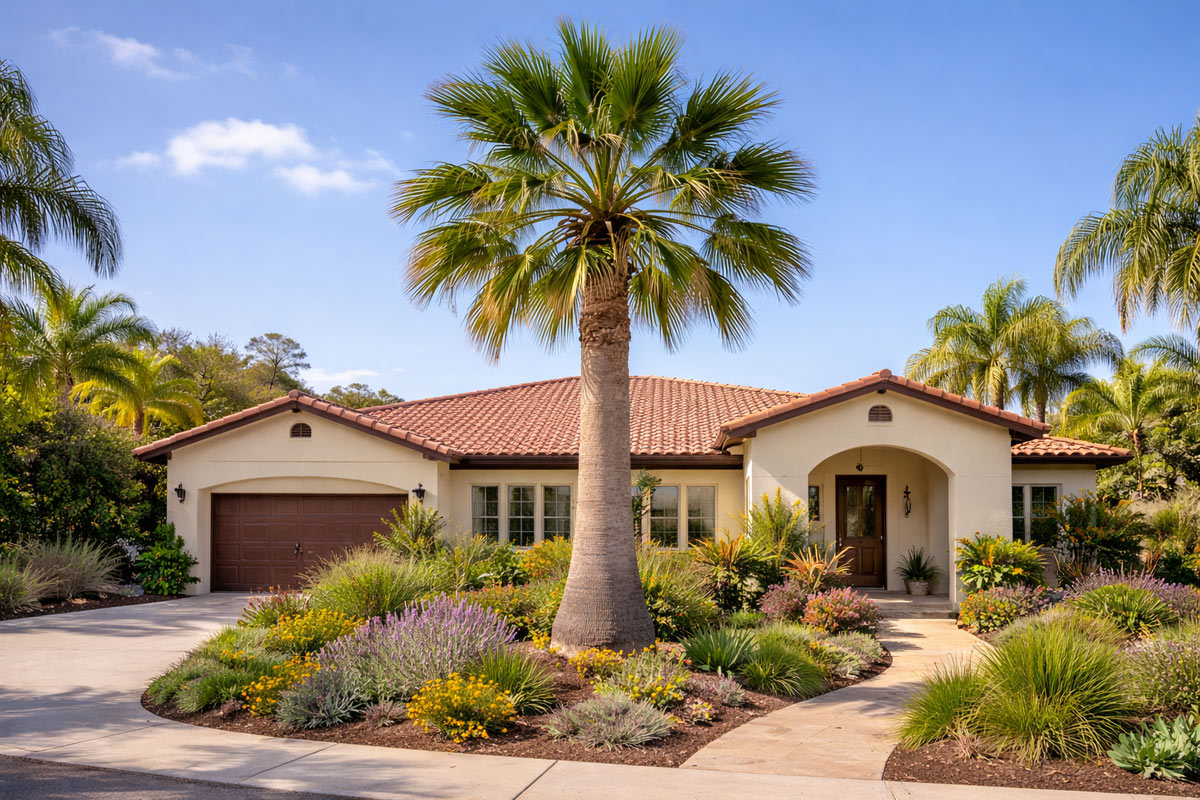
Majestic palm beauty
SAN DIEGO CALIFORNIA FAN PALM
From Desert Survivor to city influencer
Like so many trees and palms that decorate San Diego’s landscapes, the California fan palm isn’t another imported landscape item. And it’s not just the only native palm species to California, it’s the only one native to the entire western United States. Long before San Diego had craft coffee shops and beach traffic, these palms were thriving in desert oases across Southern California, Arizona, and Northern Mexico.
Picture this: scorching desert sun, dry rocky terrain, and then suddenly, a pocket of green anchored by tall palms. That’s where these trees naturally grow. Because they’re closely tied to underground springs, their presence was often a welcoming sign of water in harsh environments. For Indigenous communities, the California fan palm wasn’t just scenery—it was a valuable means for survival.
Native locals used the palm for:
- Food (their edible fruit)
- Weaving baskets for carrying food and goods
- Creating mats for sleeping and shade
- Roofing structures with layered thatching
- Making sandals and simple tools
Later, in the late 19th and early 20th centuries, California looked to expand and beautify its cities. People loved the look of palms, especially fan palms, and they quickly became symbolic of the state’s warm climate and relaxed lifestyle. Consequently, landscapers began planting them widely in parks, along boulevards, and eventually in residential neighborhoods. Although the California fan palm originally thrived inland, it adapted well to cultivated environments closer to the coast.
Interestingly, even though they’re the only ones native to Southern California, the California fan palms are not as prevalent in this region as other palm species, like the date palm, queen palm, and the California fan palm’s cousin and skinny lookalike—the Mexican fan palm. However, it played a very influential role in the classic Southern California look.
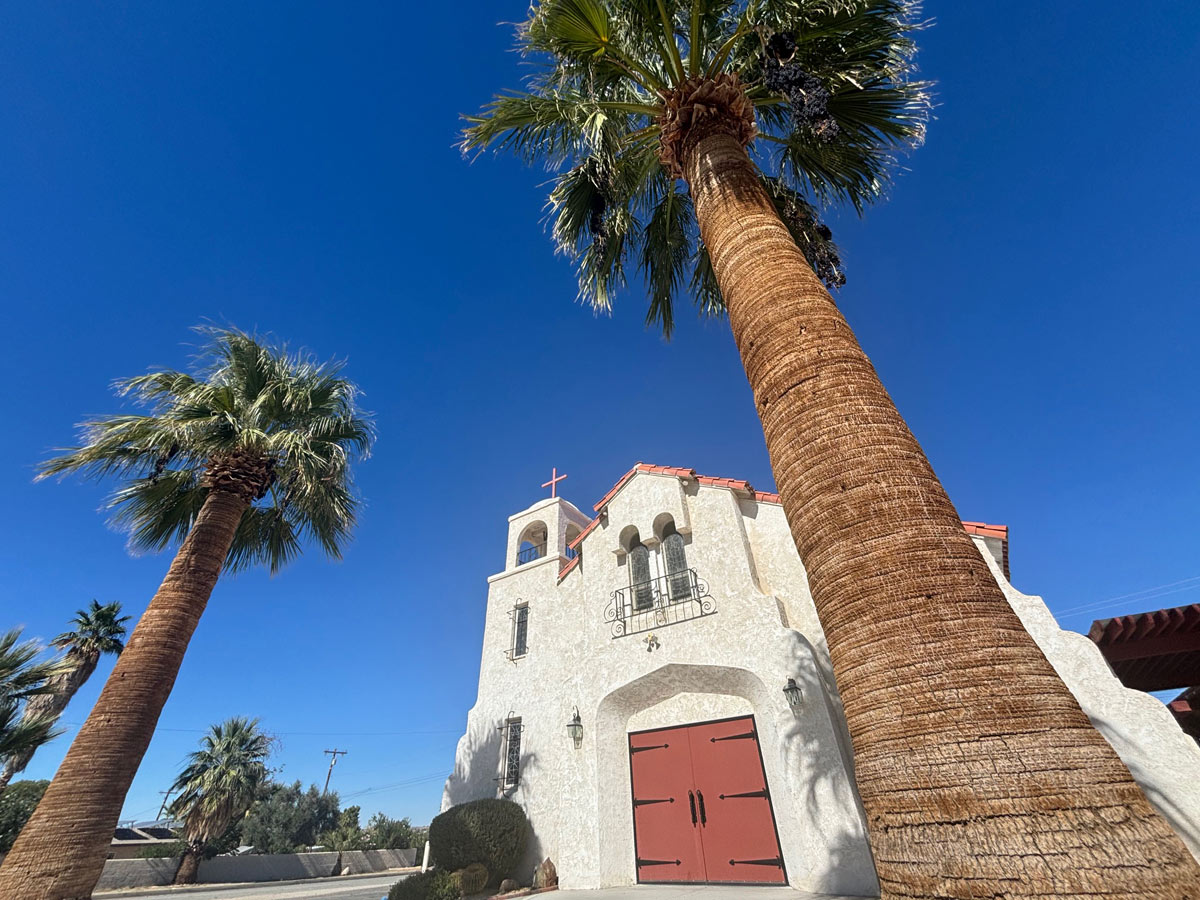
California fan palm
JOSHUA TREE, CALIFORNIA
What Makes the California Fan Palm Unique?
The California fan palm stands out for several reasons, especially when compared to other palm species commonly found in San Diego. And once you know what to look for, it’s hard not to spot them when you’re driving or walking through your favorite amusement park.
Native and Climate-Adapted
Because it naturally began thriving in Southern California, this palm species is a rockstar in extreme heat and drought conditions. Its deep root system allows it to access underground water, making it more resilient than many non-native palms. Naturally, it’s a favorite palm choice for landscapers in inland and desert communities.
Thick, Sturdy Trunk
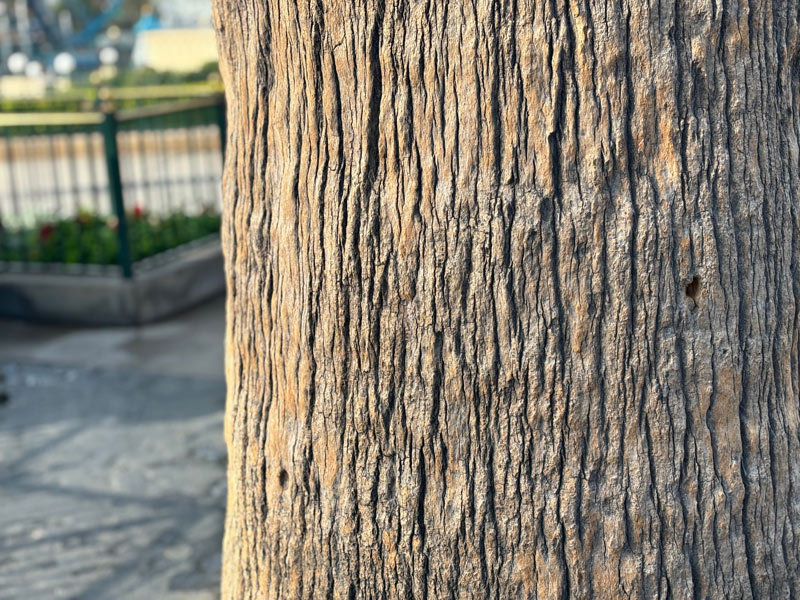
While it looks extremely similar to the Mexican fan palm, its wide, stocky trunk is the key feature that differentiates it. Its greyish-brown trunk typically grows two to three feet in diameter.
Due to its girth, it also loses its frond base more easily than the Mexican fan palm. Therefore, manicured California fan palms have a smooth trunk.
Large fan-shaped leaves
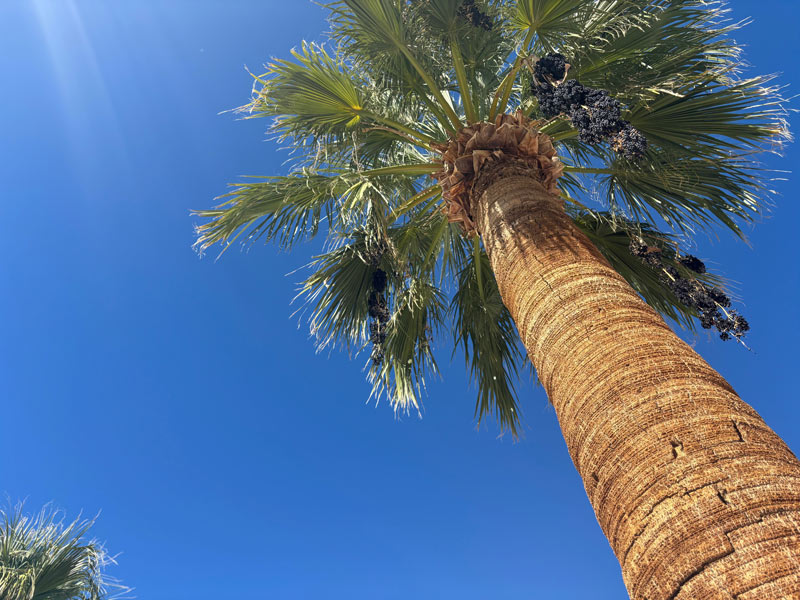
The California fan palm’s fronds are fan-shaped. Hence the name—California fan palm. The fronds can grow several feet wide and have distinctive thread-like fibers along the edges, which is where the species gets its name (filifera menas “thread-bearing”).
Long Lifespan
With proper care, California fan palms can live for many decades, sometimes well over a hundred years. That longevity makes professional maintenance especially important to preserve safety and appearance.
The girthy trunk of a California fan palm is one of the thickest palm trunks on the planet.
Why this palm loves San Diego
Thankfully, our climate feels like a vacation for the California fan palm. They thrive in full sun, tolerate heat, and can handle coastal conditions better than many people expect. In addition, San Diego’s mild winters mean very little frost stress.
If you’re not sure where you have seen these giant palms, they can often be seen in:
- Residential landscapes
- Commercial properties and hotels
- Golf courses and parks
- Historic neighborhood
- Along roadways and public spaces, especially inland.
Additionally, because this species evolved in dry conditions, it handles our rain-free months like a champ. That said, “drought-tolerant” doesn’t mean “never needs water.” Young palms especially appreciate deep watering while they establish roots. But, once mature, they can handle stretches of dry weather far better than many other landscape trees.
Furthermore, Southern California’s mix of sandy and well-draining soils works in its favor. As a result, these palms often thrive in both coastal neighborhoods like Pacific Beach and desert cities like Joshua Tree.
Fun Facts About the California Fan Palm
Even if you’ve seen these palms your whole life, there are some fun details you might not know.
- California fan palms can survive wildfires by protecting their growing point deep inside the trunk.
- They naturally form “palm oases” in deserts, creating micro-ecosystems for wildlife.
- The dead fronds were historically left on the tree in nature, providing shelter for birds and animals.
- Their trunk is one of the thickest palm trunks in the world.
- The palm’s fruit, often overlooked, was once a dietary staple for native people.
California fan palm vs. Mexican fan palm: The friendly rivalry
Many San Diegans assume all tall fan palms are the same. However, there’s a noticeable difference between the California fan palm and the more popular Mexican fan palm (Washingtonia robusta). And once you see it, you can’t unsee it.
To begin with, the trunks tell a big part of the story. California fan palms have thick, sturdy trunks. They look solid and substantial, like they’ve been lifting weights. On the other hand, Mexican fan palms are slimmer and more pole-like. They often grow taller, and they appear more narrow and streamlined.
Secondly, the canopy differs. California fan palms tend to have fuller, broader crowns with large fan-shaped leaves. In contrast, Mexican fan palms usually have smaller crowns compared to their height.
Height and Shape
The Mexican fan palm is slimmer and grows taller, upwards of 100 feet. You see them often towering over homes and buildings. Whereas, the California fan palm is shorter (typically growing to 40 to 60 feet) and thicker, with a much more robust trunk.
Trunk Appearance
California fan palms have a wider, heavier trunk that already appears “smooth” from a distance. However, the Mexican fan palm needs to be stripped to achieve the same appearance. This is because the base of the fronds is more stubborn and stays attached to the trunk unless physically stripped by a tree trimmer or by heavy winds.
It’s common to see Mexican fan palms with these sharp ridges along their trunk, but trimmed California fan palm trunks will always have bare trunks.
Fronds
From a distance, both palms appear to have identical fronds. Only a trained eye would be able to distinguish the two. The Mexican fan palm’s fronds are glossier and slightly smaller. However, the California fan palm has duller, “hairier” fronds.
Both species require regular pruning to clean off dead fronds. Unfortunately, if you desire a neat-looking palm to make a beauty statement in your property, you won’t get it unless you have the dead frond skirt trimmed annually. And since Mexican fan palms are faster growing, they grow their skirts quicker than you would like.
In natural settings, those skirts can offer insulation and habitat for various animals, such as birds and rodents. However, in urban neighborhoods, this isn’t ideal, since who wants a family of rats living just feet away from their house?
Growth Speed
Mexican fan palms grow faster—their skinny figure allows them to. This is why they are commonly used for a quick visual impact. On the other hand, California fan palms grow more slowly because of their hefty frame. But they end up being the sturdier of the two over time.
Native Range
No surprises here—it’s in the name. California fan palms are native to California, while Mexican fan palms originate from Mexico.
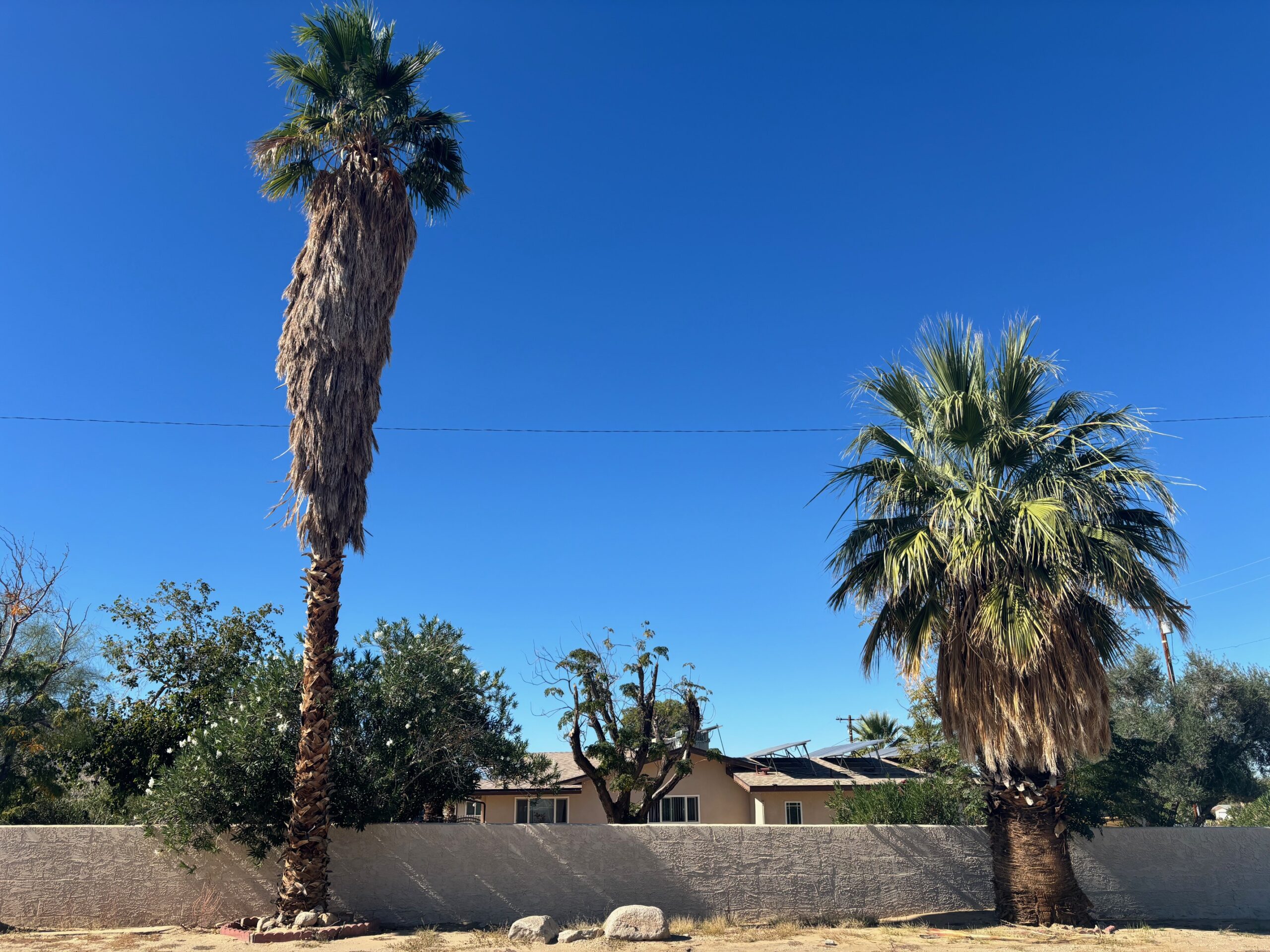
SEE THE DIFFERENCE
Both fan palms are the same age.
The fast-growing Mexican fan palm on the left grew skinny and tall. The slower-growing California fan palm on the right grew short and stumpy.
Maintenance: Not High Drama, Just Smart Care
Even though California fan palms are tough, you’re not completely hands-off. Like anything that grows 50 feet in the air, they need thoughtful care.
Pruning is the most obvious task to maintain the beauty of your palm. These palms should be trimmed annually. And what’s great about them is that, unlike other palm species like the Canary Island date palm, the California fan palm can handle a fairly heavy trim—or what arborists call “high and tight.”
Watering is fairly straightforward. Young palms benefit from consistent deep watering. Later on, mature palms need less frequent irrigation. Nevertheless, occasional deep watering during long dry periods keeps them looking their best.
Nutrients can also become an issue in sandy soils. Yellowing leaves may indicate deficiencies. In that case, palm-specific fertilizers can help restore vibrant color and growth.
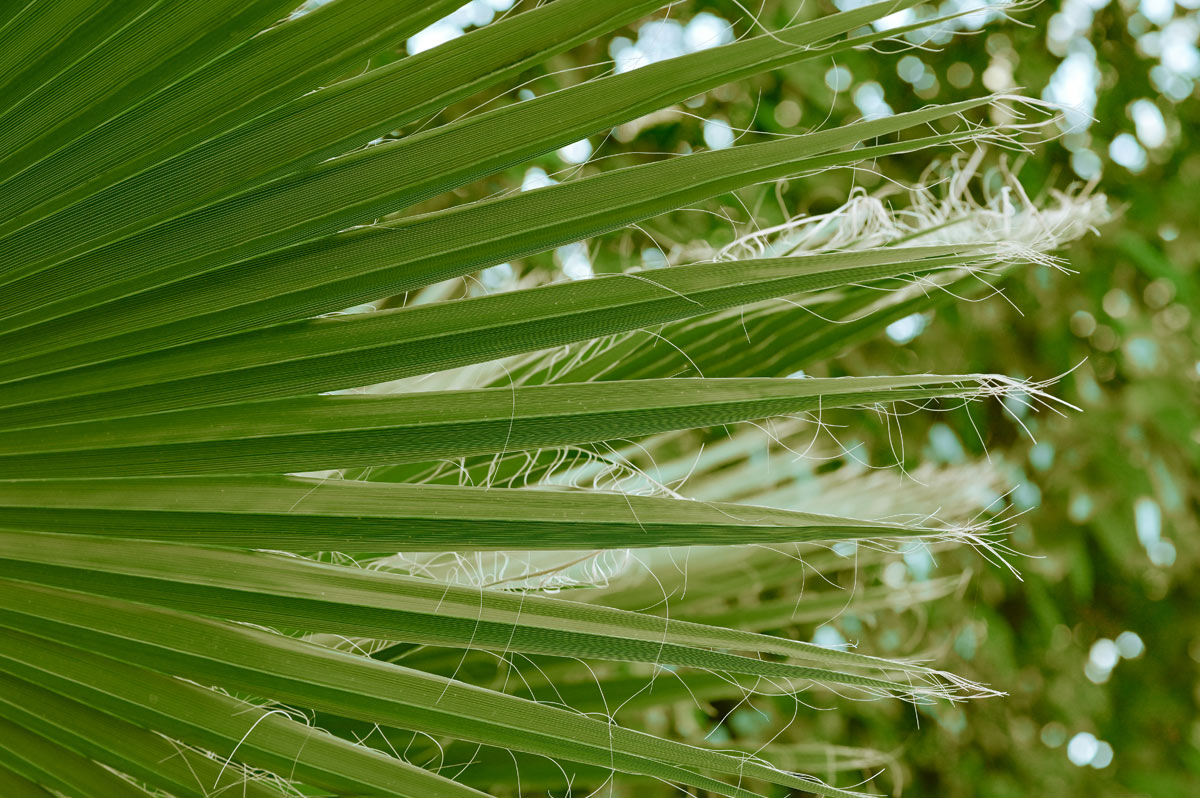
CLOSE-UP OF FROND
CALIFORNIA FAN PALM FROND
Safety First: These Trees Are Tall
Let’s talk height. While they may get a slower start than their cousin, mature California fan palms can easily reach 40 to 60 feet. That’s roughly the height of a four- to six-story building. Consequently, trimming isn’t exactly a ladder-and-gloves situation.
Climbing any tall tree—let alone a skinny one that’s 50-feet tall—without proper equipment and skills should be avoided. Leave it to the professionals, like LC Tree Service. It isn’t just convenient—it’s often the safest option.
Why LC Tree Service Is a Smart Local Choice
When it comes to maintaining palms in San Diego, local knowledge matters. LC Tree Service understands the city’s unique climate, soil conditions, and neighborhood regulations. Whether you live near the coast or farther inland, our arborists tailor their approach accordingly.
For example, coastal palms may deal with salt exposure, while inland palms endure hotter summer temperatures. Therefore, care strategies must adjust according to location. LC Tree Service provides professional palm trimming, health assessments, and emergency services when storms hit.
Additionally, hiring experienced professionals saves homeowners time and risk. Instead of wrestling with tall ladders or worrying about falling debris, you can rely on a trained crew that handles the job efficiently and safely.
Ultimately, investing in proper palm care protects your property, enhances curb appeal, and keeps your landscape looking polished.
A True California Beauty
The California fan palm is more than just a “tree”—they connect us to a much older California, one of desert springs and natural resilience. Even though San Diego has grown into a bustling urban area, these palms quietly remind us of the region’s roots. That blend of history and style is part of what makes them so appealing.
It’s a native survivor, a design statement, and a defining feature of San Diego’s skyline. Although it’s hardy and adaptable, it still benefits from proper care, especially as it grows taller and more prominent.
While the popular Mexican fan palms may overshadow them, knowing how to distinguish the two just makes driving through our city a little more interesting. So next time you glance up at one of these leafy giants swaying above your neighborhood, give it a little appreciation. After all, not every city gets to claim a native palm as part of its everyday scenery.
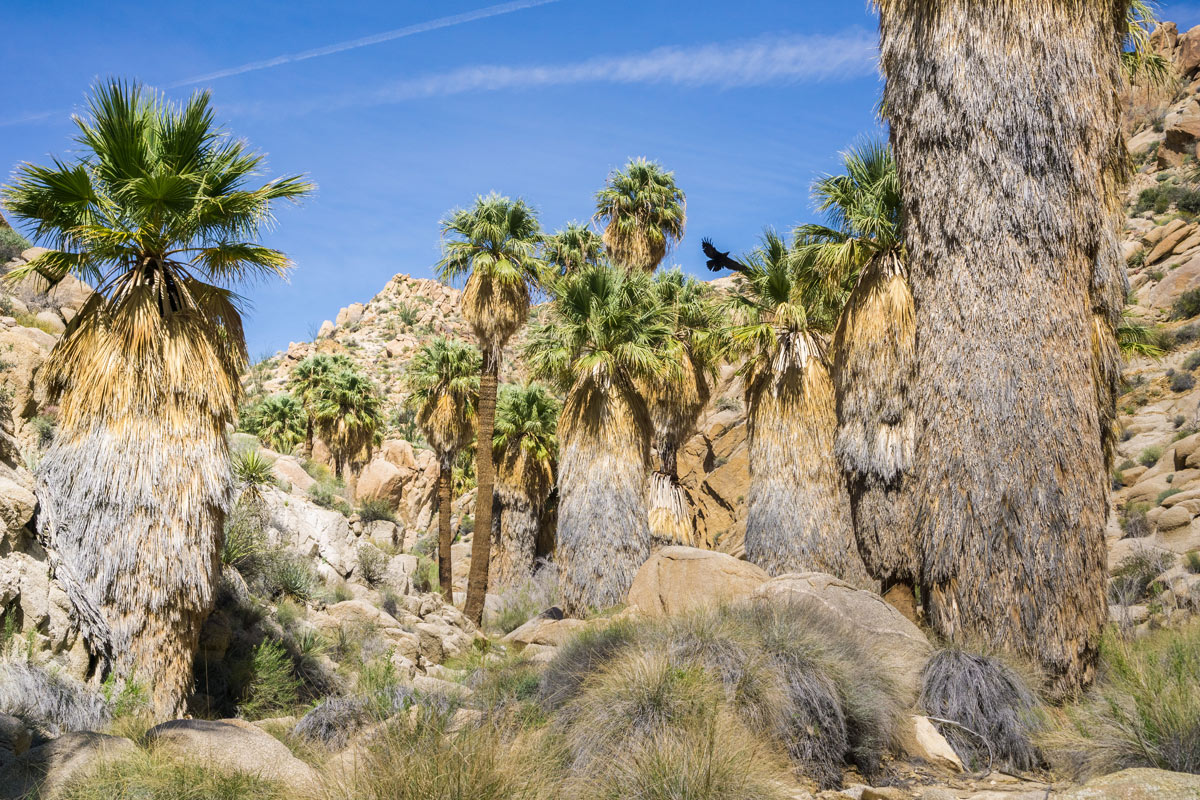
CLUSTER OF PALMS IN A DESERT OASIS
CALIFORNIA FAN PALMS IN JOSHUA TREE, CALIFORNIA