We love our trees in San Diego, from our majestic palms to our towering eucalyptus trees that line our streets. These trees add plenty of charm to our landscape. However, some trees, as beautiful as they may be, aren’t satisfied staying put in their corner of the yard. They like to spread out their roots, wreaking havoc on properties and the surrounding areas. Let’s dive into some of the trees with the most destructive roots that you might find lurking in your backyard or along the streets of sunny San Diego.
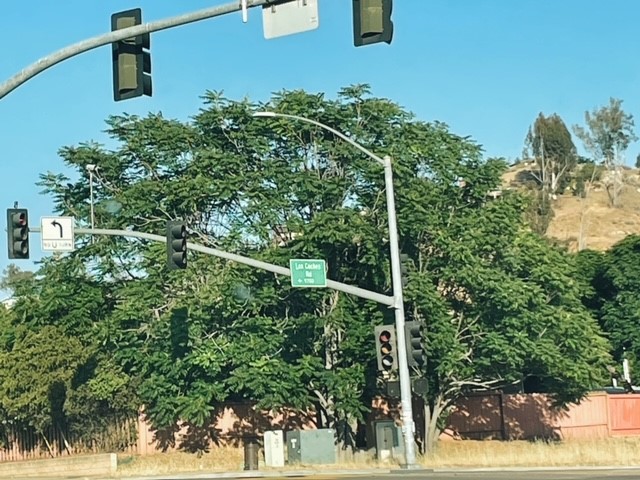
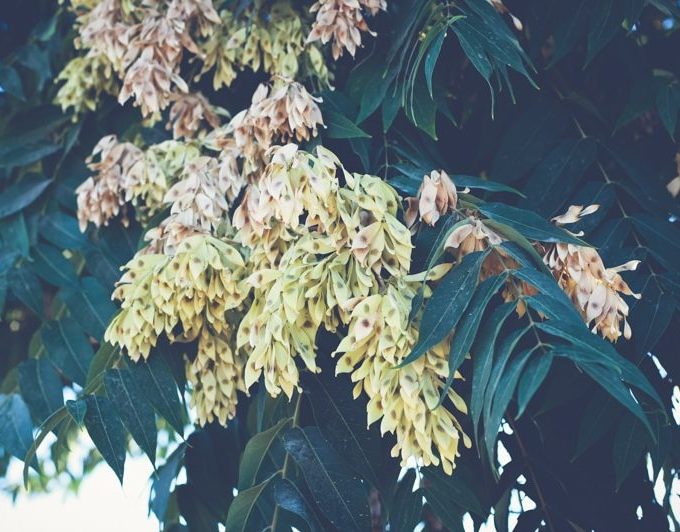
Tree-of-Heaven
Ailanthus altissima
First on the list of “root bullies” is the infamous tree that is ironically named the tree-of-heaven, or Ailanthus altissima. But, is this tree an angel or a devil in disguise? Let’s take a deeper look into this tree with menacing roots. Originally brought to California from China during the Gold Rush, it was praised for being fast-growing and drought-resistant. Unfortunately, these qualities are also why this tree has become such a problem, with some owners referring to it as the “tree-from-hell.”
The tree-of-heaven is highly invasive! It is so invasive that it is the selling and distribution of it is banned in a handful of states, which include California, Connecticut, Massachusetts, New Hampshire, Oregon, Vermont, and Washington. This tree produces up to 325,000 seeds annually—taking over a landscape with invasive and aggressive roots.
Why are the tree-of-heaven roots a problem?
The tree-of-heaven comes with a root system that grows fast, spreads aggressively, and doesn’t take “no” for an answer. These roots travel far from the trunk, sprouting new shoots everywhere they go, which means one small tree can quickly turn into a full-blown neighborhood takeover.
The real trouble lies in how stubbornly these roots regenerate. Cut the tree down, and the roots respond by sending up even more shoots—sometimes dozens—like they’re offended you tried to evict them.
In addition to its expansive root system, the tree-of-heaven has an almost superpower-like ability to thrive in poor soil conditions that would leave many other species struggling for survival. This tenacity, while impressive, makes it extremely hard to eliminate. Even if you chop it down and grind the stump, any remaining roots can regenerate new shoots in a matter of weeks, creating a never-ending cycle of labor for those trying to reclaim their landscape. This is why removing an unwanted tree-of-heaven requires the use of toxic herbicides. Not the ideal situation, which is why removing any tree-of-heave, big or small, should be performed immediately before spreading occurs.
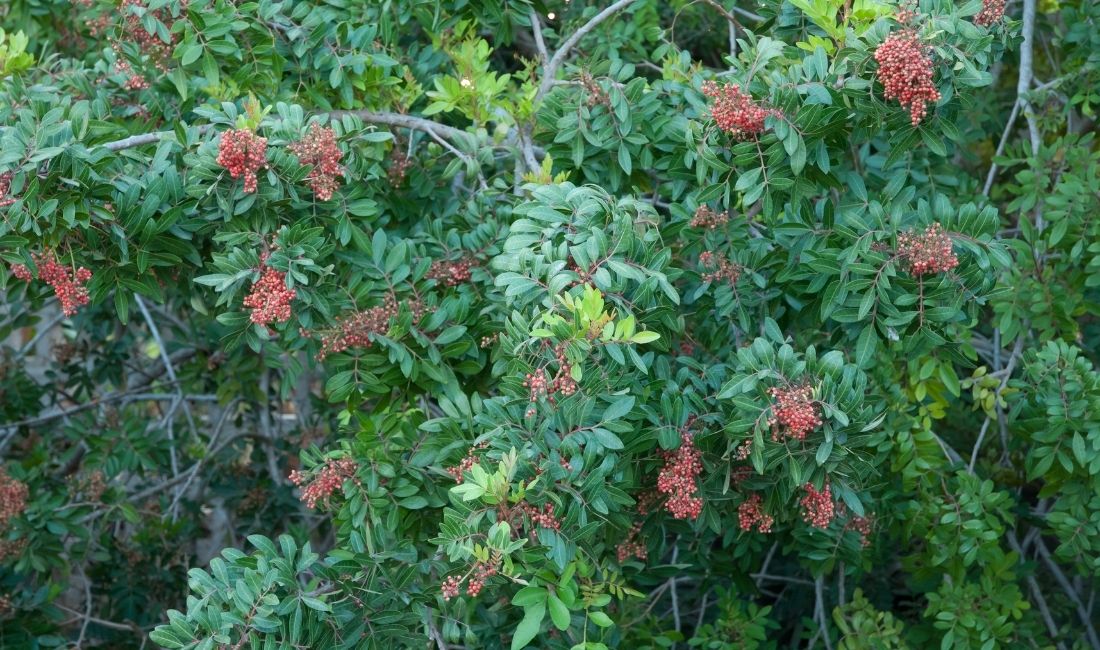
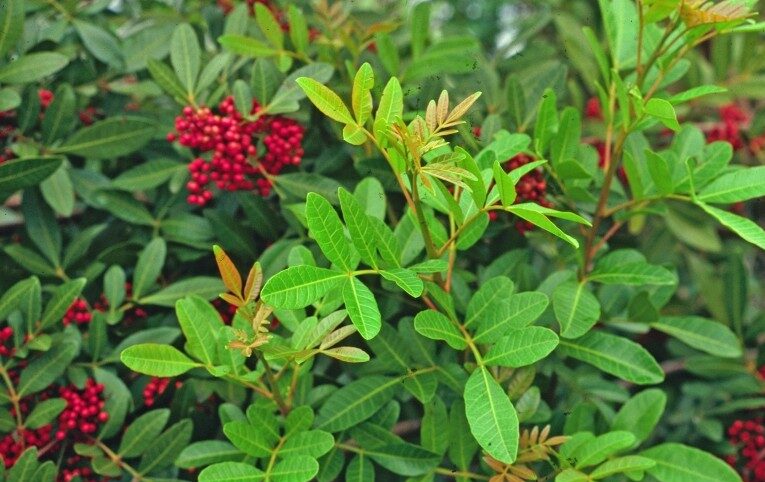
Brazilian Pepper Tree
Schinus terebinthifolia
Our next troublemaker, the Brazilian pepper tree, or Schinus terebinthifolia, may look festive at first glance with red berries that remind you of Christmas—but it’s not as merry as you might expect. Originally brought to Florida in the 1800s as an ornamental tree, it quickly spread from coast to coast and has become an invasive bully here in San Diego. While the tree-of-heaven still holds the number spot as the most disliked tree in our county, the Brazilian pepper tree doesn’t trail far behind. And it’s easy to see why; the two share a lot in common.
Why is the Brazilian pepper tree roots a problem?
The Brazilian pepper tree grows like a weed! It’s a prolific reproducer thanks to a two-part system. First, small birds love eating their fragrant red berries and spread the seeds to new locations, allowing new shoots to sprout all over the place. Second, it possesses an extensive, shallow root system that grows laterally and does not give up. Like the tree-of-heaven, when its roots are cut, multiple shoots pop up, quickly forming a forest of baby trees that will need to be removed. And once mature, the far-reaching lateral roots of the Brazilian pepper tree can cause major damage to nearby hardscape and foundations.
The root system of the Brazilian pepper tree is one big nuisance! Like the tree-of-heaven, it rapidly shoots out an abundance of lateral roots that sprout new plants, even if the mother tree has been cut down. In fact, they can regrow a new tree even if a majority of the roots are gone. It is persistent, and it is aggressive. And once developed, the Brazilian pepper tree’s roots can cause significant damage—lifting sidewalks, foundations, and cracking pipes.
If you have a Brazilian pepper tree on your property, removing it takes a little patience. To remove this invasive species, the key is to fully remove or kill all of the roots with herbicide because any bit of root left behind can result in regrowth. If any new sprouts appear, follow-up herbicidal treatments are necessary to not only kill the new sprouts, but to kill remaining roots that were initially undetected. This is why hiring a tree removal specialist is the most effective way to fully eradicate a Brazilian pepper tree. LC Tree Service is available in the San Diego area.
Ficus Tree
Ficus benjamina
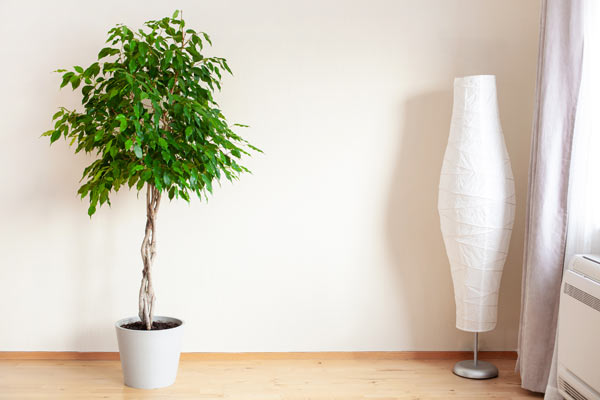
The next offender on our list is the infamous ficus tree. This is a tree that you either love or hate—or you love it until you hate it. With over 850 ficus species, the most common one found in San Diego is the Ficus benjamina, which is typically referred to simply by its genus name, ficus. The ficus is a common potted houseplant, which sounds like a pretty tame tree. But don’t be fooled. It’s still one to watch. When planted outdoors, it grows massive and produces robust roots that push out anything in its way.
Why is are ficus tree roots a problem?
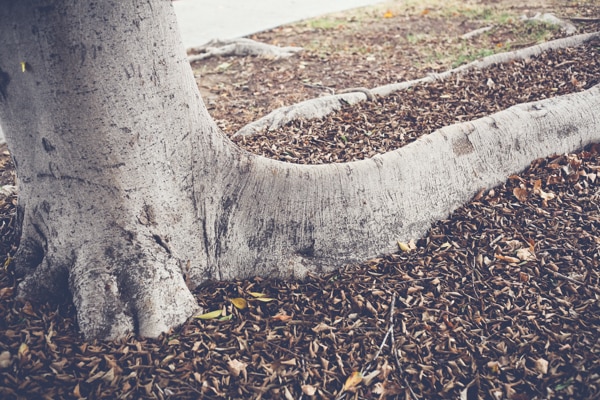
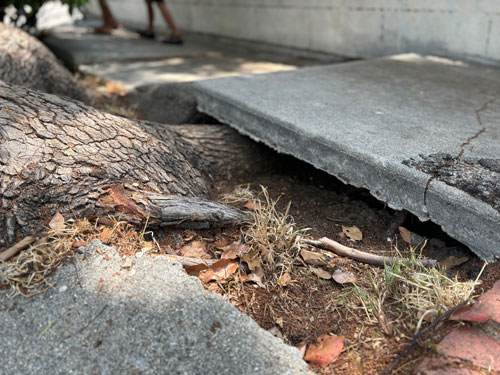
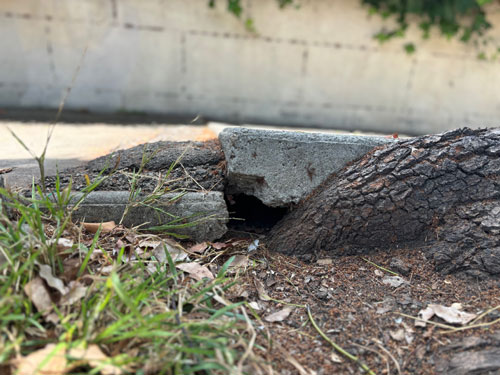
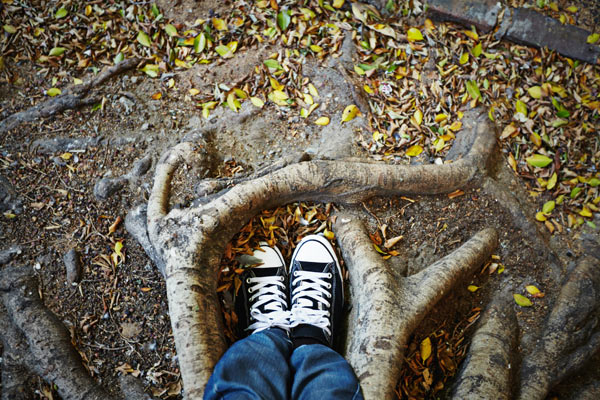
The ficus canopy may look polished and lush, but beneath the soil, those roots are basically running a covert expansion project. These roots are the “King of Roots.” They’re robust, fast-growing, and extend outward with zero hesitation, often staying just below the surface and moving anything in their way. Because ficus trees love water and thrive in warm climates, your yard’s irrigation system becomes an irresistible invitation. Their roots can squeeze into pipes, crack through concrete, and lift sidewalks with the confidence of a tree that believes everything in your yard belongs to it.
What makes ficus trees especially challenging in San Diego is how well they adapt to our climate. They grow quickly, stay green year-round, and handle heat like a champ. In densely packed neighborhoods, ficus trees often outgrow their original planting space, sending roots across property lines, under fences, and straight into handscaped areas.
California Sycamore
Platanus racemosa
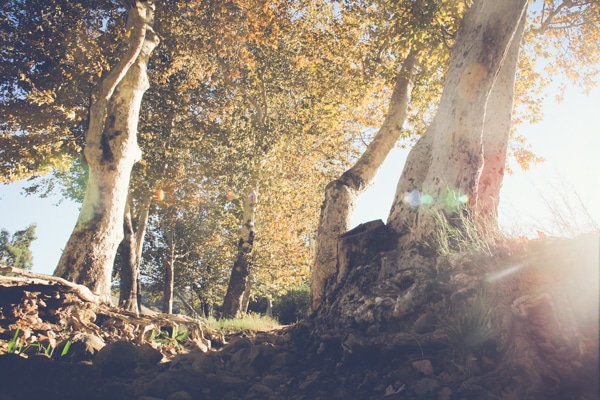
If you live in San Diego, you’ve seen our next tree—the California sycamore. This native tree is the one flaunting a patchy white-and-tan trunk like it just walked out of a trendy North Park boutique. With huge, hand-shaped leaves and a laid-back love for canyons, creek beds, and neighborhood parks, the California sycamore brings shade, wildlife, and personality to our sunny SoCal landscape.
California sycamores are beautiful, but they’re not always suitable for planting in your neighborhood. They have the potential to grow fast—and big. Therefore, they need plenty of space to spread out. While their sprawling canopies are gorgeous and are the primary tree in San Diego that reminds you of an East Coast autumn, they drop leaves, seed balls, and flaky bark, which requires more sweeping, raking, and clogged gutters than most homeowners expect.
Why are the California sycamore roots a problem?
California sycamore roots may not have quite the reputation as ficus trees, but don’t let their mellow, native charm fool you—they can still stir up plenty of issues for San Diego property owners. These trees grow big, fast, and wonderfully leafy, but all that top-side growth needs serious support underground. Their roots tend to spread wide and stay shallow.
And because sycamores love water almost as much as San Diegans love sunshine, their roots will eagerly gravitate toward anything that promises moisture, such as irrigation and drainage systems. This often leads to lifted sidewalks, bumpy lawns, and occasional driveways. Beautiful, yes. But California sycamore trees are like that friendly neighbor who means well but somehow always ends up borrowing your things without asking. Lovely trees—just not always lovely root behavior.
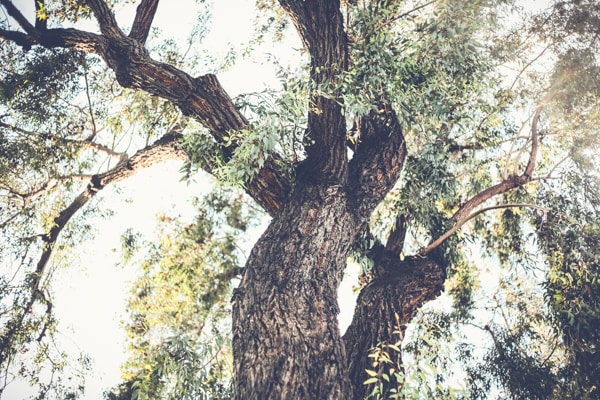
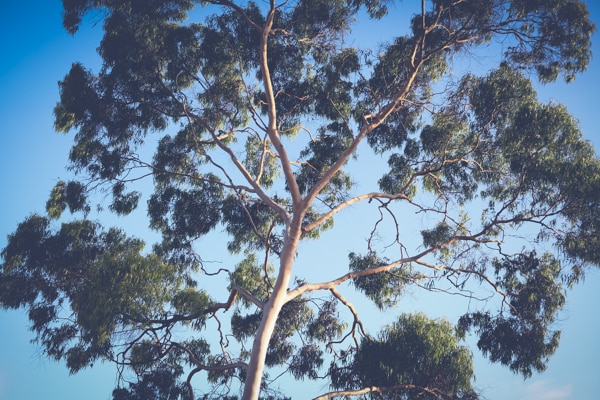
Eucalyptus trees
Our next tree is one that we would think all San Diegans know—the eucalyptus tree. With many different species that are so prevalent in our city, this section isn’t about just one tree species, but the group of these towering Australian imports. Eucalyptus trees are commonly seen lining canyons, neighborhoods, and coastal bluffs with their tall silhouettes and fragrant leaves. Originally introduced from Australia in the late 1800s, they’ve since quickly spread throughout the region and become a recognizable presence in both urban and natural spaces.
Known for their fast growth and ability to adapt perfectly to our dry climate, eucalyptus trees bring a mix of benefits and challenges to San Diegans. Whether you appreciate their shade or are fearful of their hazards, they’re an undeniable part of everyday life in San Diego.
Why are eucalyptus tree roots a problem?
Don’t get us started on the negative side of the eucalyptus. This is a tree that comes with a long list of challenges that locals know all too well—from limbs falling without warning to aiding in San Diego’s problematic wildfires. But beyond safety issues, eucalyptus trees can also create significant environmental and structural challenges. Their aggressive root systems have a habit of invading irrigation lines, lifting sidewalks, and competing with native plants for limited water—problems that can be both expensive and frustrating for San Diegans.
Eucalyptus trees have root systems that are extremely aggressive and wide-spreading, which makes them particularly problematic for San Diego homeowners. These trees evolved in Australia’s dry climate, so their roots naturally travel long distances and grow close to the soil surface in search of water. In San Diego—where yards are irrigated regularly, and water is often scarce—the roots are drawn toward moisture sources like sprinkler lines, drainage systems, septic tanks, and even tiny cracks in concrete.
Because eucalyptus roots are both strong and shallow, they are known to lift sidewalks, crack driveways, and undermine foundations much more quickly than many property owners expect. Their rapid growth rate only adds to the issue, allowing damage to develop in just a few seasons.
San Diego’s soil makes them even more mischievous. Much of our terrain features compacted clay or decomposed granite, which doesn’t allow deep root penetration. Instead of growing downward, eucalyptus roots spread outward along the surface, extending well beyond the tree’s drip line. In neighborhoods where homes sit close together—think Kensington, Clairemont, or La Mesa—these roots can run out of open space very quickly. When that happens, they start exploring places they don’t belong: foundations, retaining walls, irrigation walls, irrigation systems, and sometimes your neighbor’s yard.