A SAN DIEGO RESIDENT’S GUIDE TO SAVING A SICK TREE BEFORE IT’S TOO LATE
If you’ve walked outside lately and caught yourself staring at your tree thinking, “Something doesn’t look right,” you’re not alone. Maybe the leaves are turning brown in the middle of summer. Perhaps branches are suddenly bare, the bark is peeling, or the tree just doesn’t look as full and healthy as it did last year. Whatever the warning sign may be, it’s natural to wonder whether your tree is simply stressed or if it’s actually dying.
The good news is that many trees can recover when problems are identified early. On the other hand, waiting too long can turn a minor issue into one that requires complete removal. That’s why understanding the signs of a dying tree is one of the best things any property owner or manager can do.
Here in Southern California, trees deal with challenges that people in many other parts of the country never experience. Long periods without rain, intense summer heat, poor soils, invasive insects, fungal diseases, irrigation problems, and even wildfire conditions all place stress on our urban forest. As a result, what starts as a slightly sick tree can decline surprisingly quickly if the underlying problem isn’t addressed.
Fortunately, not every struggling tree is beyond saving. In fact, many can make an impressive recovery with the right care. A San Diego certified arborist can identify the real cause of decline and recommend solutions that help protect both your tree and your property.
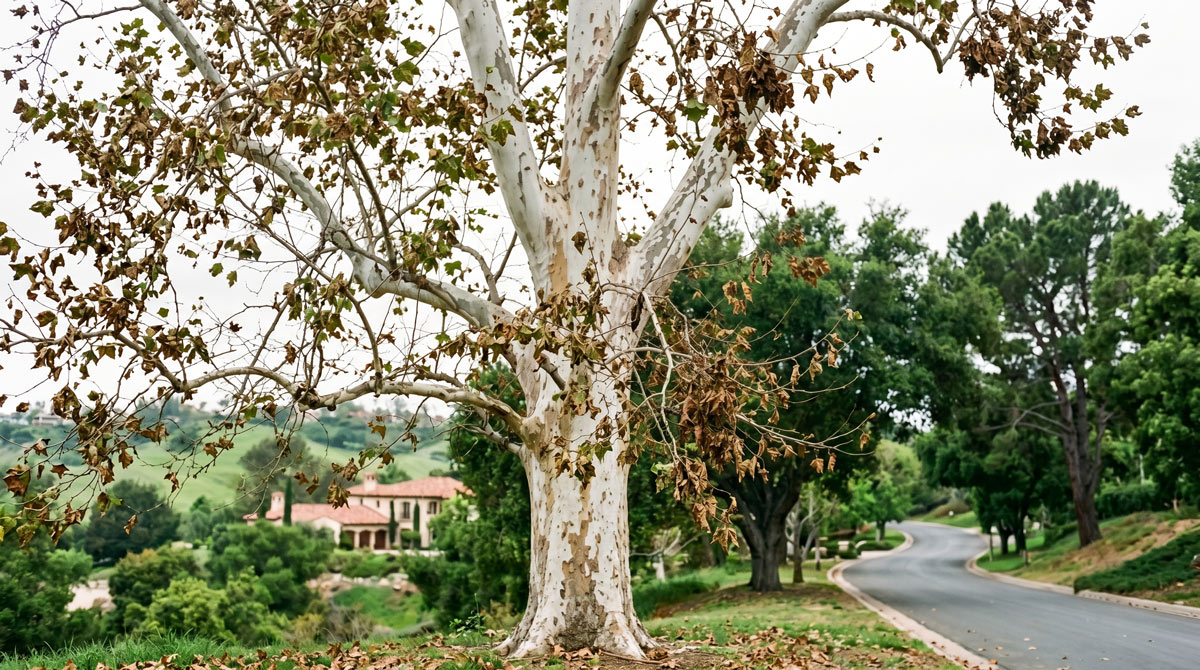
FIRST THINGS FIRST: IS YOUR TREE ACTUALLY DYING?
One of the biggest misconceptions San Diego property owners have is assuming that every unhealthy-looking tree is dying. In reality, trees often experience temporary stress that makes them appear much worse than they actually are.
Think about the last time you were sick. You probably looked tired, lacked energy, and weren’t functioning at your best. However, that didn’t necessarily mean you were facing a life-threatening illness. Trees behave much the same way.
Sometimes a tree is simply reacting to environmental conditions. Other times, it’s dealing with pests, disease, root damage, or years of accumulated stress. Therefore, before assuming the worst, it’s important to determine whether the tree is stressed, sick, or truly dying.
A tree that is stressed still has a strong chance of recovery. A sick tree may need professional treatment before the damage spreads. Meanwhile, a dying tree has usually lost a significant amount of its ability to recover and may eventually become hazardous if left untreated.
The challenge is knowing the difference.
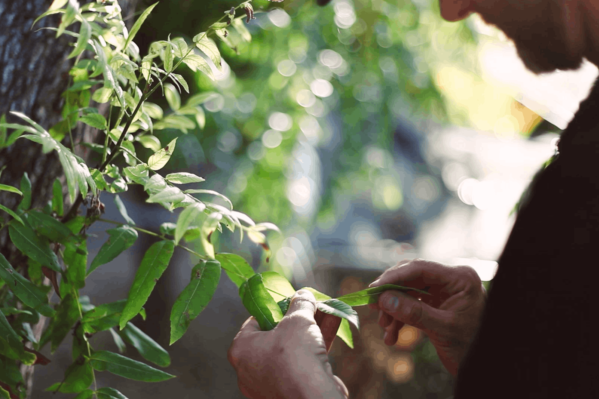
COMMON SIGNS YOUR TREE IS IN TROUBLE
Trees rarely die overnight. Instead, they usually provide warning signs for months or even years before they fail. Learning to recognize these symptoms early can make all the difference.
One of the first things people notice is thinning foliage. If your once-full tree suddenly has sparse leaves or empty branches, it’s telling you something isn’t right. While seasonal leaf drop is perfectly normal for some species, unusual thinning during the growing season deserves attention.
Another common symptom is discolored leaves. Yellow leaves may indicate nutrient deficiencies or watering problems, while brown leaves often point toward drought stress, disease, root damage, or poor soil conditions. Although many homeowners immediately blame a lack of water, the truth is that too much water can be just as harmful.
Dead branches are another major warning sign. If larger limbs stop producing leaves while the rest of the tree continues growing, sections of the canopy may already be dying. As more branches decline, the tree loses its ability to produce enough energy through photosynthesis, accelerating its overall decline.
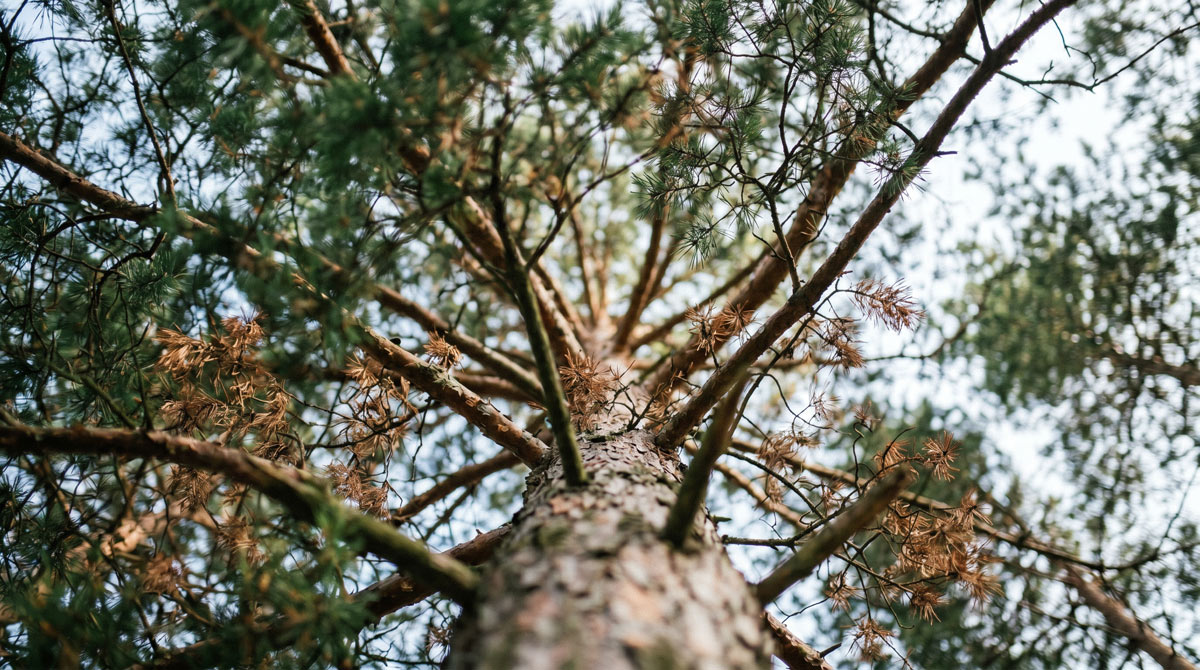
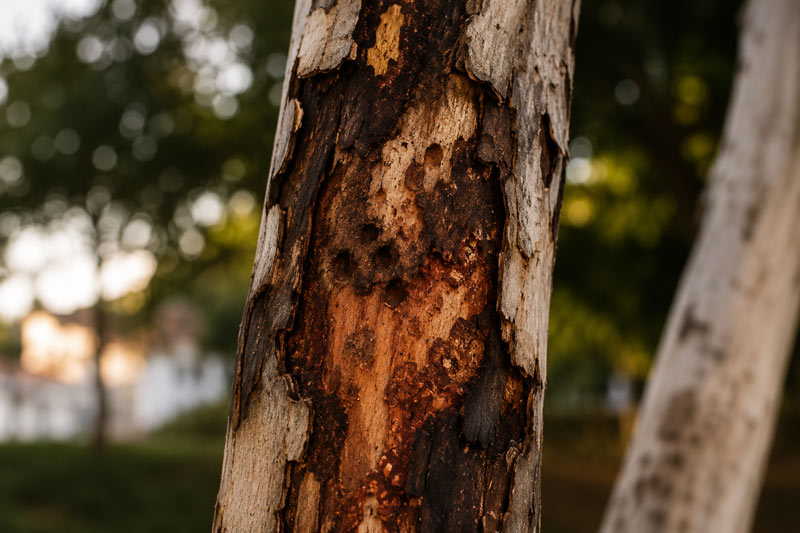
You may also notice peeling bark or large sections where bark has fallen away. Healthy bark protects the living tissues underneath, much like skin protects our bodies. Once that protective layer is compromised, insects, fungi, and decay organisms gain easy access.
Cracks in the trunk deserve immediate attention as well. While not every crack means a tree is dying, deep structural cracks can indicate internal weakness or failure. They may also increase the risk of large limbs or the entire tree falling during high winds.
Finally, mushrooms growing around the base of the tree often concern homeowners, and for good reason. While not every mushroom indicates a serious problem, fungi growing from roots or the trunk frequently signal internal decay. Since much of the damage occurs underground, the visible mushrooms are often only a small part of a much larger issue.
THE MOST COMMON REASONS TREES DIE IN SAN DIEGO
Living in San Diego certainly has its perks. We enjoy beautiful weather nearly year-round, mild winters, and plenty of sunshine. However, our climate also creates unique challenges for trees that many people don’t realize.
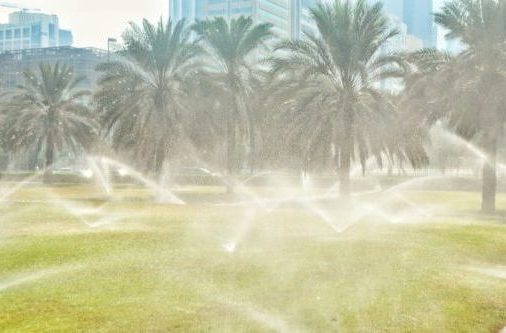
Unlike forests that receive regular rainfall, San Diego landscapes depend heavily on irrigation. Because of this, watering practices play a huge role in tree health.
Ironically, overwatering is just as common as underwatering.
Many San Diego residents assume trees should be watered the same way they water their lawns. Unfortunately, that’s one of the quickest ways to stress mature trees. Frequent shallow watering encourages roots to stay near the surface instead of growing deeper into the soil, where moisture remains available longer.
As shallow roots develop, trees become less stable and more vulnerable during hot weather. Eventually, root rot fungi can move in, attacking the weakened root system and causin ga once-healthy tree to become a sick tree.
On the other hand, extended drought conditions can also weaken trees over time. Although many California species tolerate dry conditions remarkably well, even drought-tolerant trees require occasional deep watering during prolonged heat waves.
INSECTS OFTEN ATTACK TRESS THAT ARE ALREADY STRESSED
One of the most surprising things homeowners learn is that insects usually aren’t the original problem. Instead, many destructive insects are attracted to trees that are already weakened by drought, poor irrigation, root damage, or disease. They’re easy targets. It’s similar to how illnesses are more likely to affect people whose immune systems are already compromised.
Here in San Diego, bark beetles are among the most destructive tree pests. These tiny insects primarily attack pine trees that have been weakened by drought or other environmental stress. Adult bark beetles bore through the bark and create winding tunnels beneath the surface, where they lay their eggs. As the larvae feed, they damage the tree’s vascular system, preventing water and nutrients from moving between the roots and the canopy. Before long, the needles begin turning yellow, then reddish-brown, and eventually the entire tree dies.
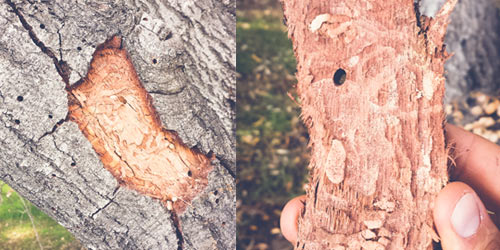
Boring holes, such as those pictured in this San Diego pine tree, are a sign of a bark beetle. It calls for immediate professional attention.
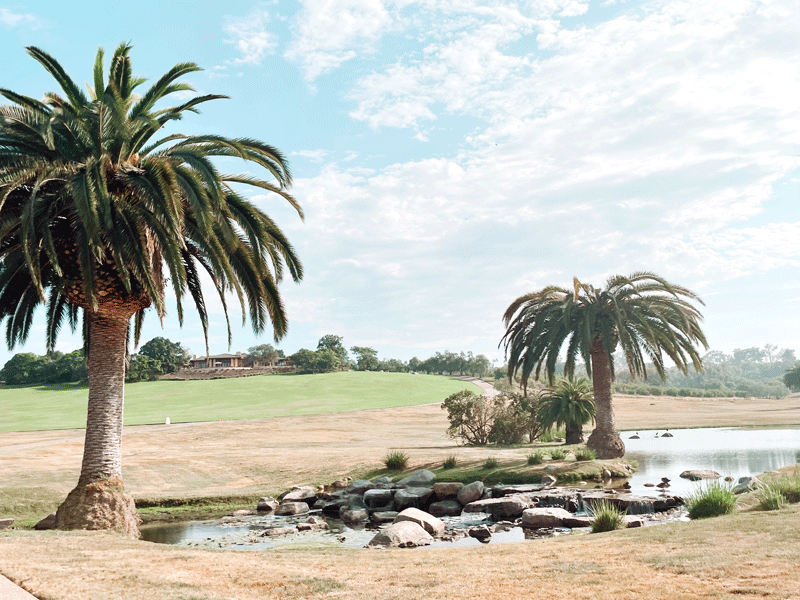
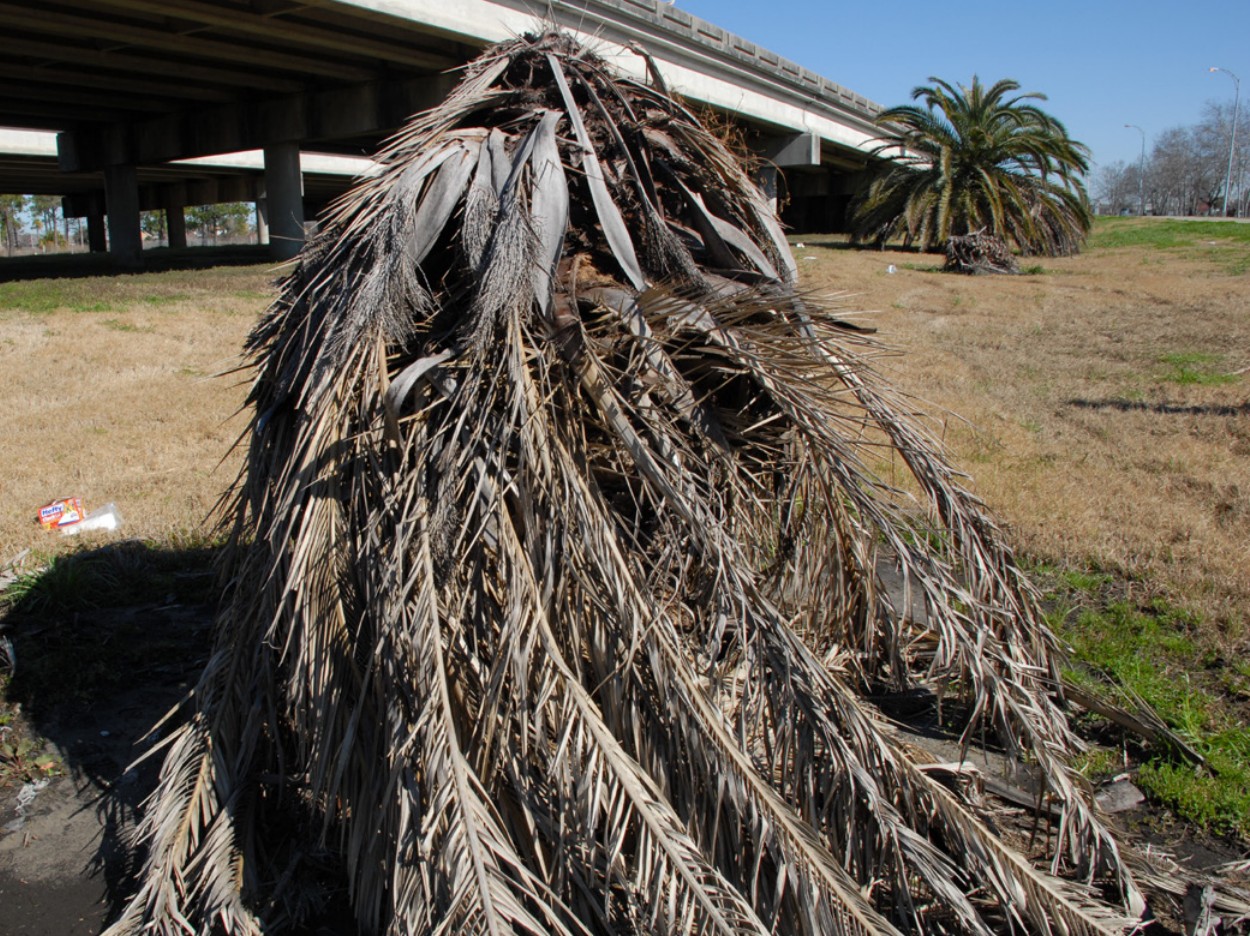
Another devastating pest that has become increasingly common throughout Southern California is the South American palm weevil. This invasive insect has had a significant impact on Canary Island date palms, one of San Diego’s most recognizable landscape trees. Unlike bark beetles, which attack beneath the bark, the South American palm weevil goes straight for the “heart,” located at the top of the palm. The adult weevil lays its eggs inside the crown, and once the larvae hatch, they tunnel through the soft internal tissue.
Unfortunately, by the time property owners notice symptoms such as drooping fronds, a collapsed canopy, or foul odors coming from the crown, the damage is often too extensive to save the palm.
See the difference between the two Canary Island date palms?
The one on the right, with its drooping canopy, is infested with the South American palm weevil.
Wood-boring beetles, flatheaded borers, and longhorned beetles can also become a problem for many hardwood trees across San Diego County. These insects often target oaks, eucalyptus, sycamores, and other trees that have been weakened by prolonged drought, sunburn, construction damage, or poor overall health. As they tunnel through the wood, they reduce the tree’s structural strength while creating openings for decay fungi and other pathogens.
Although insects receive much of the blame when a dying tree begins declining, they’re often taking advantage of an existing problem rather than causing it in the first place. That’s why treating the insects alone may not solve the issue. Unless the underlying source of stress is identified and corrected, the sick tree may continue to decline despite pest control efforts.
However, there are exceptions, such as an infestation by the South American palm weevil. Sick or healthy—they’ll attack them all.
A San Diego certified arborist can determine whether insects are the primary cause of the damage or simply a symptom of a larger health issue. By identifying the root cause early, it’s often possible to reduce further damage, improve the tree’s health, and, in some cases, save a tree that still has years of life ahead of it.
DISEASES CAN QUIETLY SPREAD FOR YEARS
Unlike storm damage, tree diseases usually develop slowly.
A fungal infection may begin in the roots long before homeowners notice any visible symptoms. Likewise, bacterial diseases often spread internally while the canopy still appears relatively healthy.
By the time leaves begin browning or branches start dying back, the disease may already be well established.
Fortunately, early diagnosis greatly improves the chances of successful treatment. That’s one reason why hiring a San Diego certified arborist is so valuable. Rather than simply guessing what’s wrong, a trained arborist understands how different diseases behave and how they affect various tree species throughout Southern California.
Equally important, they know when a tree can realistically be saved and when removal is the safest option. An honest evaluation can prevent unnecessary treatment while helping San Diego property owners make informed decisions about protecting both their landscape and their family.
ROOT PROBLEMS: THE HIDDEN CAUSE OF MANY DYING TREES
When most property owners or managers inspect a struggling tree, they naturally look up into the canopy. While that’s understandable, the real problem is often hiding underground.
Roots are the tree’s lifeline. They absorb water, collect nutrients, anchor the tree in place, and store energy for future growth. If the root system becomes damaged, every part of the tree begins to suffer. Unfortunately, root problems are easy to overlook because they’re literally out of sight, out of mind.
One of the biggest culprits is root rot. In San Diego, root rot is commonly caused by watering too frequently or by soils that stay wet for extended periods. Healthy roots need oxygen just as much as they need moisture. When the soil remains saturated, oxygen levels drop, beneficial roots begin to die, and fungi quickly move in to attack the weakened tissue.
Compacted soil can also create serious problems. Whether it’s caused by years of foot traffic, heavy equipment, or construction, compacted soil reduces the tiny air pockets that roots rely on. As a result, roots struggle to grow, absorb nutrients, and support the canopy above.
Another common issue is physical root damage. New driveways, swimming pools, sidewalks, fences, and utility trenches often cut through major structural roots without homeowners realizing the long-term consequences. A tree may appear perfectly healthy immediately after construction, yet begin declining months or even years later as those injuries take their toll.
Because root problems develop slowly, many homeowners don’t connect today’s symptoms with work that was completed several years ago. A San Diego certified arborist knows how to evaluate the entire tree—from the roots to the canopy—to determine whether hidden root damage is contributing to a dying tree.
CONSTRUCTION DAMAGE CAN TAKE YEARS TO SHOW UP
It’s surprising how often construction projects unintentionally shorten the life of a tree.
Whether you’re remodeling your home, installing a patio, adding artificial turf, or replacing underground utilities, construction activities can place tremendous stress on nearby trees. Sometimes the damage is obvious, but more often it isn’t.
Heavy equipment compresses the soil around roots. Excavation severs major roots. Building materials get stacked over root zones, preventing oxygen an dwater from reaching the soil. Even raising or lowering the soil grade by a few inches can dramatically change how roots function.
The frustrating part is that trees don’t always respond immediately. In fact, many trees continue looking healthy for one to five years after construction. Then, seemingly out of nowhere, the canopy begins thinning, branches start dying back, and property owners or managers are left wondering why a once-beautiful tree is now declining.
If you’ve completed landscaping or construction near a tree that’s now struggling, there’s a good chance the two are connected.
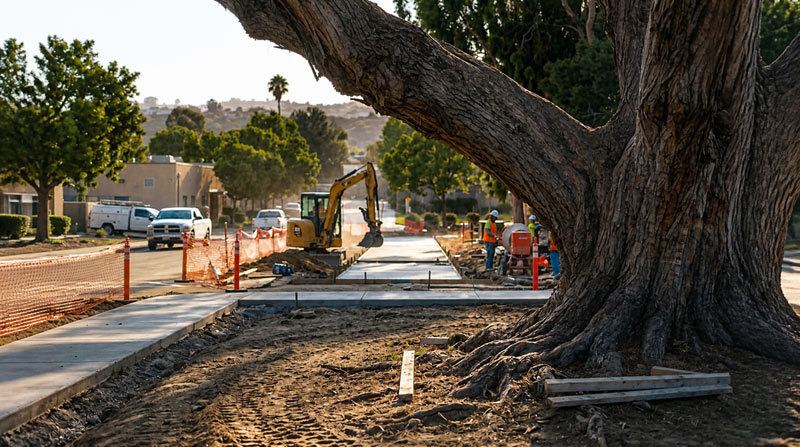
Mature trees can often decline years after construction occurred in close proximity to them.
MORE WATER ISN’T ALWAYS THE ANSWER
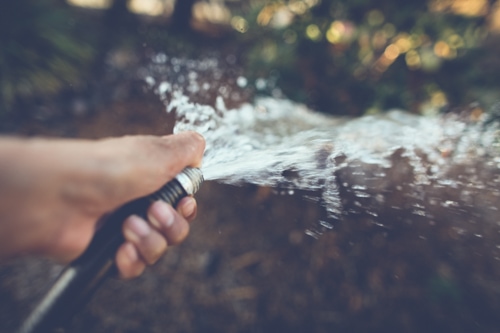
One of the first things people do when they notice a sick tree is grab the hose. While that comes from a good place, adding more water without understanding the problem can sometimes make things worse.
Trees need the right amount of water—not too much and not too little. Mature trees generally benefit from deep, infrequent watering that encourages roots to grow downwards. Whereas frequent shallow watering keeps roots close to the surface, where temperatures fluctuate dramatically, and moisture disappears quickly.
Overwatering also creates ideal conditions for fungal diseases like root rot. Once those fungi become established, simply watering more won’t help. In fact, it often accelerates the decline.
Instead of guessing, it’s much better to determine why the tree is showing symptoms in the first place. Browning leaves, wilting, and thinning foliage can all result from both underwatering and overwatering. Therefore, since the symptoms often look nearly identical, an accurate diagnosis is essential.
NOT EVERY DEAD BRANCH MEANS THE TREE NEEDS TO BE REMOVED
Many people assume that one dead branch means the entire tree is dying. Fortunately, that’s often not the case.
Trees naturally shed branches over time. Smaller interior limbs may die as the canopy grows denser and shades them out. Storm damage, temporary drought stress, or minor injuries can also cause isolated branches to decline while the rest of the tree remains healthy.
However, the situation becomes more concerning when large scaffold branches begin dying throughout the canopy. Multiple dead limbs, extensive decay, large trunk cavities, or significant structural cracks may indicate that the tree’s health—or its stability —is compromised.
This is where professional evaluation becomes invaluable. A San Diego certified arborist can determine whether pruning, treatment, or monitoring is appropriate, or whether removal has become the safest option.
Many trees that homeowners assume are beyond saving simply need some TLC (tender love and care). Likewise, some trees that still appear green may actually be hazardous due to hidden internal decay.

WHY PROFESSIONAL DIAGNOSIS MATTERS
The internet is a wonderful place to gather ideas, but diagnosing tree problems from photos or general descriptions can be incredibly difficult.
Many diseases produce nearly identical symptoms. Nutrient deficiencies often resemble insect damage. In addition, watering issues can mimic fungal infections. Even experienced professionals sometimes need to inspect the bark, roots, canopy, soil conditions, and surrounding landscape before identifying the true cause.
That’s why hiring a San Diego certified arborist can save both time and money.
Instead of applying unnecessary treatments or removin ga tree that could have been saved, an arborist develops a plan based on evidence rather than guesswork. In many cases, addressing the underlying issue early can dramatically extend the life of the tree.
THE BEST THING YOU CAN DO FOR A SICK TREE
If you suspect your tree is declining, don’t panic. Trees are remarkably resilient, especially when problems are caught early.
Start by paying attention to changes. Have the leaves become smaller than usual? Is one side of the canopy thinner than the other? Have mushrooms appeared around the base? Are you seeing sawdust, tiny holes in the bark, or unusual sap flow? These clues help paint a much clearer picture of what’s happening.
Most importantly, don’t wait until large branches begin falling or the tree becomes an emergency. A dying tree often gives people months—or even years—of warning signs before reaching that point.
Early action almost always provides more options than waiting until the damage becomes severe.

TRUST LC TREE SERVICE TO HELP PROTECT YOUR TREES
At LC Tree Service, we understand that trees are much more than part of your landscaping. They provide shade during San Diego’s hot summers, increase property value, create curb appeal, and become part of your family’s memories for decades.
That’s why our first priority is always preserving healthy trees whenever it’s safe and practical to do so. If your sick tree can be saved, we’ll explain your options honestly and recommend the treatments that make the most sense. We don’t believe in unnecessary removals or scare tactics. Instead, we focus on giving clients clear information so they can make confident decisions about their property.
Our team includes experienced San Diego certified arborists who understand the unique challenges that local trees face, from prolonged drought and invasive pests to fungal diseases and storm damage. Whether you’re concerned about bark beetles attacking a pine, a South American palm weevil infesting a Canary Island date palm, or a mature oak showing signs of decline, we have the knowledge and experience to properly diagnose the problem.
As a proud DVOSB (Disabled Veteran-Owned Small Business), LC Tree Service is built on the values of integrity, hard work, and dependable service.
We treat every property with the same care and respect we’d expect for our own homes.
Our goal isn’t simply to complete another job—it’s to build lasting relationships with property owners and managers throughout San Diego County by providing honest recommendations and exceptional workmanship.
If your tree doesn’t look quite right, don’t ignore the warning signs. The sooner a problem is identified, the better the chances of protecting your investment and avoiding costly emergencies.
Contact LC Tree Service today to schedule an inspection with one of our San Diego Certified Arborists. Whether your tree needs treatment, pruning, or simply an expert opinion, we’re here to help you love your outdoor space.