Owning property in San Diego comes with plenty of perks. Beautiful weather, mature shade trees, colorful landscapes, and outdoor living spaces all make our region a wonderful place to call home. However, our unique climate also creates challenges that many homeowners don’t expect. Long dry summers, occasional heavy rains, poor soils, pests, and even improper watering habits can all take a toll on your trees’ health.
The tricky part is that trees don’t show signs of illness the way people or pets do. In fact, a tree can struggle for months—or even years—before its problems become obvious. By the time branches begin falling or the entire canopy starts dying, the damage is often extensive. Fortunately, trees usually send out early warning signs if you know what to look for.
The good news is that catching those warning signs early can often save a tree. In many cases, a certified arborist can diagnose the problem and recommend treatments before the damage becomes permanent. That’s why learning to recognize the symptoms of a San Diego sick tree is one of the best things you can do for your property.
Let’s look at the most common warning signs that your tree may need professional attention.
WHY TREES BECOME SICK IN SAN DIEGO
Before diving into the symptoms, it helps to understand why trees become unhealthy in the first place.
Unlike forests where nature balances itself, landscape trees deal with a variety of human-made stresses. Construction projects can damage roots. Lawns may receive too much irrigation while nearby trees don’t receive enough deep watering. Soil often becomes compacted from foot traffic or vehicles, making it difficult for roots to absorb oxygen and nutrients.
At the same time, San Diego’s climate presents its own challenges. Extended droughts stress even mature trees, while sudden heat waves can suddenly scorch foliage. Additionally, certain tree species that thrive elsewhere simply struggle in Southern California’s dry conditions.
Pests and diseases are another factor. Insects, such as bark beetles, aphids, and scale insects, can weaken trees over time. Meanwhile, fungal diseases often develop when excessive watering practices create consistently damp conditions around the roots or trunk.
The important thing to remember is that a sick tree rarely suffers from just one issue. More often, several stressors work together until the tree can no longer recover on its own.

WARNING SIGN #1
LEAVES ARE TURNING YELLOW OR BROWN
One of the earliest signs of an unhealthy tree is a noticeable change in leaf color.
While it’s perfectly normal for some trees to change color during seasonal transitions, unexpected yellowing or browning during the growing season deserves attention. Healthy leaves should generally maintain a rich, vibrant color throughout most of the year.
Several issues may be responsible.
Sometimes the tree simply isn’t getting enough water. Other times, the exact opposite is true, and excessive watering has caused root damage or aided fungal growth. Nutrient deficiencies, compacted soil, poor drainage, and root diseases can also interfere with the tree’s ability to transport water and minerals throughout its canopy.
In San Diego, overwatering is surprisingly common. Homeowners often water their lawns frequently, which makes sense because grass has more shallow roots. However, trees actually benefit from slow, deep irrigation rather than daily surface watering, since tree roots situate themselves within the top two to six feet of soil.
If only a few older leaves are changing color, the issue may be minor. However, widespread yellowing throughout the canopy usually indicates that something deeper is happening below the soil.
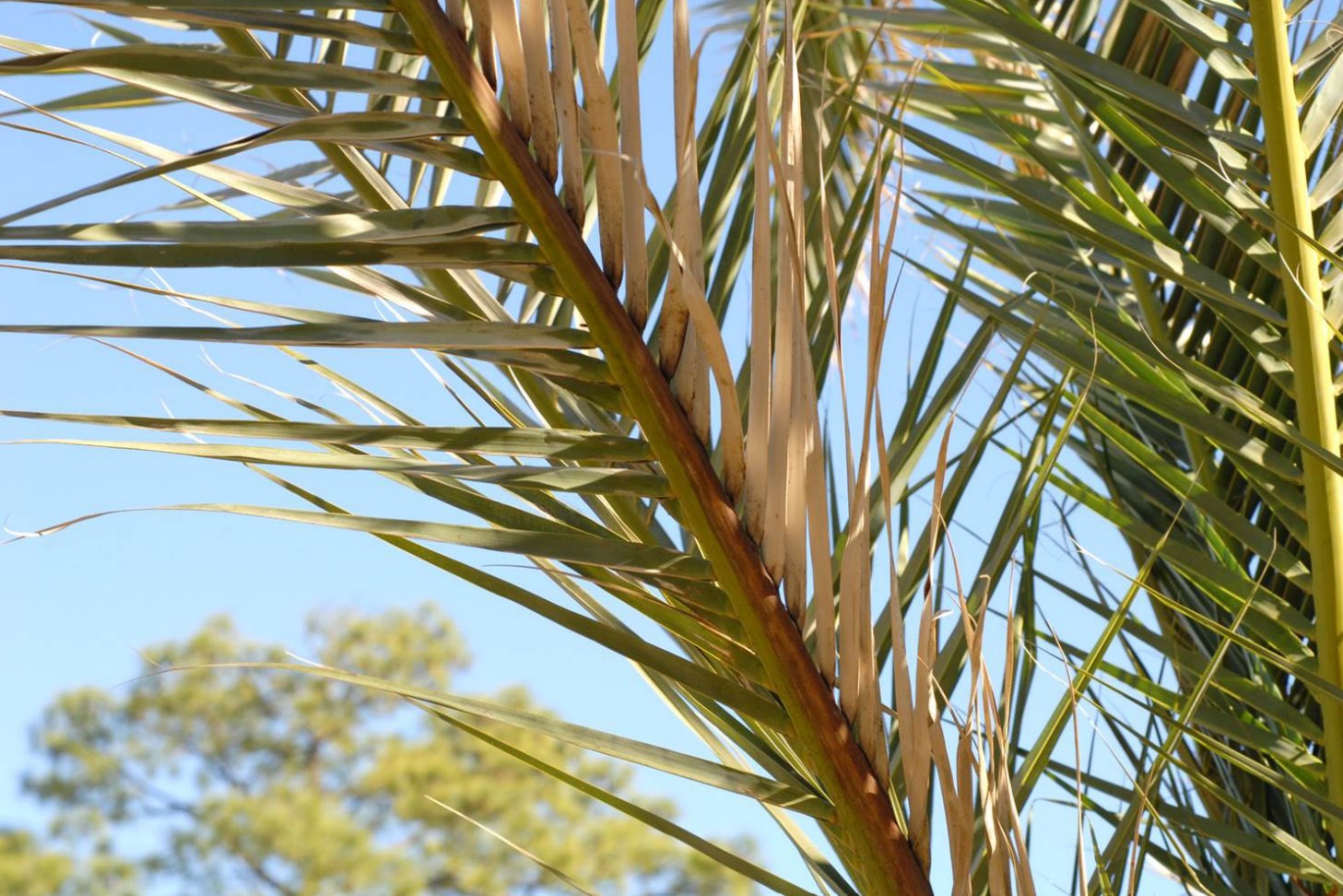
This palm has been infected with Fusarium wilt—a fungal disease that is common amongst San Diego palms.
A common indicator is when half of a palm frond turns brown.
WARNING SIGN #2
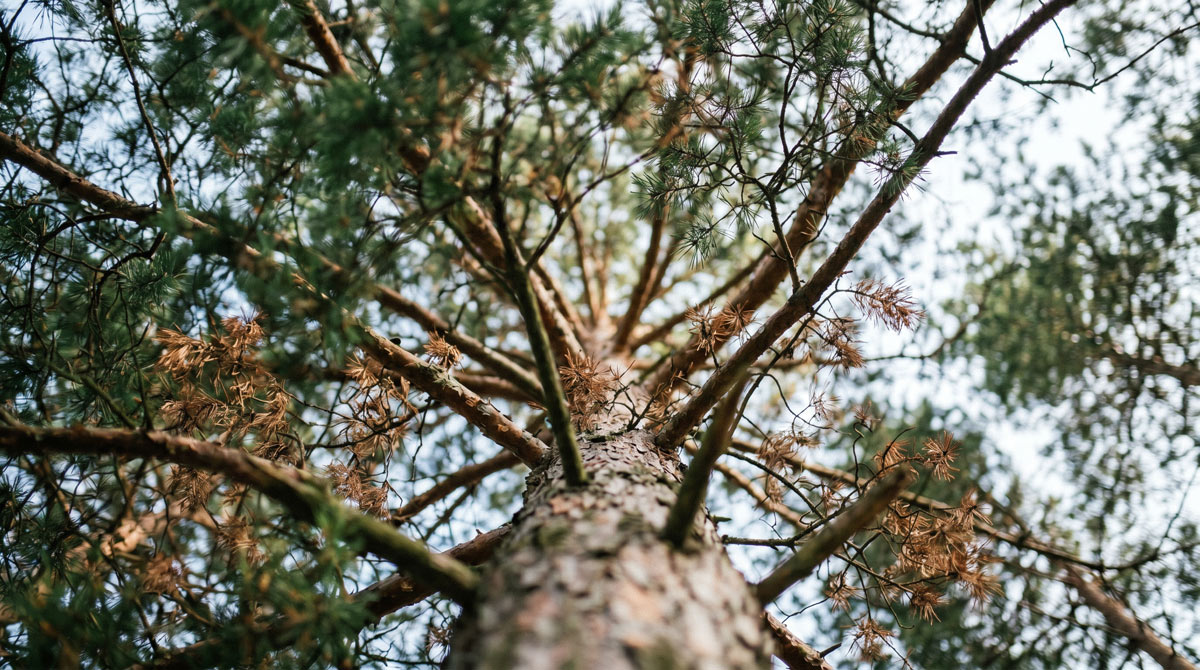
DEAD BRANCHES ARE APPEARING THROUGHOUT THE CANOPY
A healthy tree naturally sheds small twigs from time to time. Large dead branches, however, are another story.
Dead limbs often indicate that portions of the tree are no longer receiving enough water or nutrients. As a result, the tree sacrifices those branches in an attempt to conserve energy for healthier sections.
Initially, you might notice only one or two dead branches near the top of the canopy. If this happens, it’s important to keep your eye on the tree. If more branches continue dying over several months, the tree may be experiencing significant stress.
This warning sign should never be ignored, and you’ll need to consult a certified arborist immediately.
Dead limbs may seem innocent, but don’t let that make you complacent in seeking professional help. These branches become brittle quickly and may break without warning, especially during Santa Ana winds or winter storms. Consequently, they can create serious hazards for people, vehicles, homes, and neighboring properties.
Even if the tree can ultimately be saved, removing hazardous limbs promptly is an important step toward improving safety.
WARNING SIGN #3
LEAVES ARE SMALLER THAN NORMAL
Sometimes a tree doesn’t lose its leaves. Instead, it produces noticeably smaller ones.
This subtle symptom often goes unnoticed because homeowners see the tree every day. However, comparing current growth with photos from previous years can reveal dramatic differences.
When a tree lacks sufficient energy, it produces smaller leaves because it cannot support normal growth. Although the canopy may still appear full from a distance, the reduced leaf size often signals declining health.
This issue commonly develops after root damage, prolonged drought stress, or construction activities that disturb the root system.
The sooner the underlying cuse is identified, the better the chances of reversing the decline.
WARNING SIGN #4
BARK IS CRACKING, PEELING, OR FALLING OFF
Tree bark serves as protective armor. Therefore, damage to the bark should never be ignored.
While some species, such as our local eucalyptus trees, naturally shed bark as they mature, sudden peeling, deep cracks, or missing sections may indicate disease, insect activity, sunscald, or internal decay.
In San Diego, extreme summer heat can also contribute to bark damage, particularly on trees that have recently been heavily pruned. Without adequate canopy coverage, direct harsh sunlight can literally cook portions of the trunk.
Unnatural peeling bark is a cause for concern because not only does it signal an issue, but it often creates entry points for fungi, insects, and additional decay organisms. What begins as a relatively small injury can quickly become a much larger structural problem if left untreated.
WARNING SIGN #5
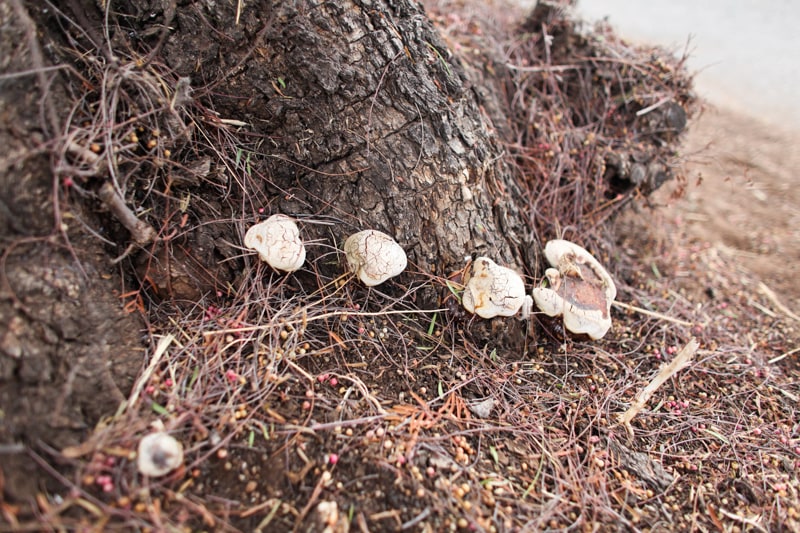
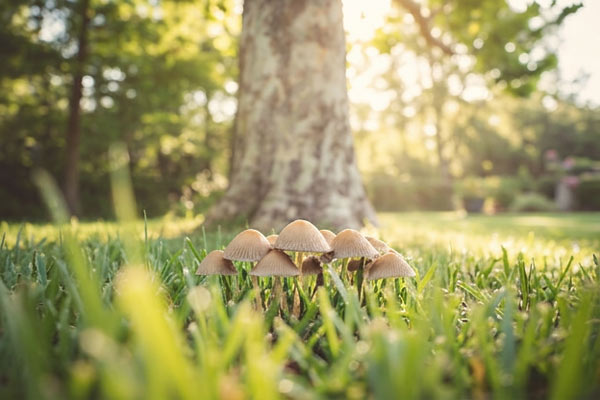
MUSHROOMS ARE GROWING AROUND THE BASE OF THE TREE
Many homeowners are surprised to discover mushrooms appearing around a tree after rainy weather.
Although mushrooms themselves aren’t always harmful, they frequently indicate that something harmful is happening below the surface. And that something is the breaking down of organic material beneath the soil. Unfortunately, that material can sometimes mean the tree’s root system.
Root rot is one of the most serious conditions affecting landscape trees. Once major structural roots begin decaying, the tree loses both stability an dits ability to absorb water efficiently.
This is especially concerning because root problems often remain hidden until advanced stages. Above ground, the tree may simply appear stressed or thin. Below ground, however, significant decay could already be occurring.
Whenever mushrooms consistently appear around the same tree, it’s wise to have a certified arborist inspect the root system before the problem worsens.
WARNING SIGN #6
THE TREE IS LEANING MORE THAN IT USED TO
Not every leaning tree is dangerous.
Many trees naturally grow at slight angles throughout their lives. However, a tree that suddenly begins leaning or whose lean gradually increases deserves immediate attention.
Changes in lean often indicate root failure. Heavy rains, saturated soils, construction damage, root decay, or high winds can all weaken the underground support system.
If you notice fresh soil cracking near the trunk, exposed roots lifting from the ground, or a tree leaning noticeably after a storm, don’t wait to have it evaluated.
A leaning tree can become unstable much faster than many homeowners realize.
WARNING SIGN #7
THE TREE ISN’T PRODUCING NORMAL NEW GROWTH
Healthy trees continually produce fresh shoots, leaves, and small branches.
When new growth becomes sparse or stops altogether, it’s often because the tree is directing all of its remaining energy toward survival instead of expansion.
Young trees should produce vigorous growth each spring. Mature trees grow more slowly, yet they should still show healthy annual development.
If neighboring trees are flourishing while one tree appears stagnant year after year, it’s a strong indication that something is interfering with its health.
WARNING SIGN #8
INSECTS ARE EVERYWHERE
Not every insect is harmful to trees.
In fact, many insects are beneficial pollinators or natural predators of destructive pests. However, unusually large populations of certain insects often indicate that a tree is already under stress.
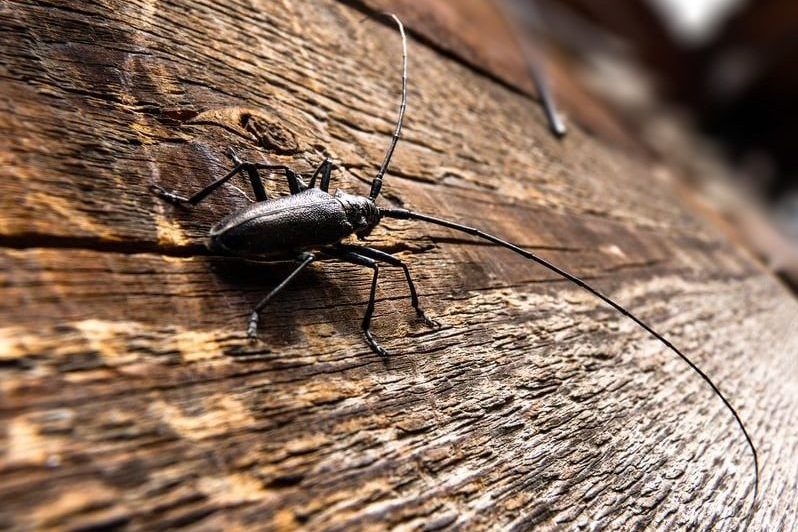
Bark beetles, scale insects, aphids, borers, and spider mites are among the most common pests found throughout San Diego landscapes.
Interestingly, many of these insects are attracted to weakened trees. They’re easy targets when their natural defenses have already been compromised by drought, poor watering practices, disease, or physical damage.
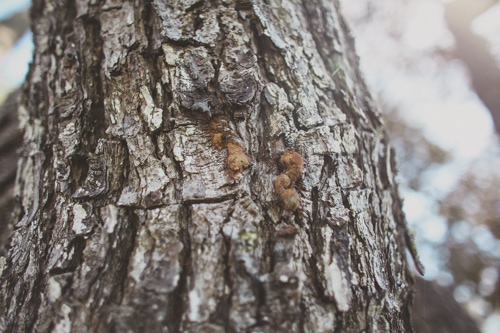
Consequently, treating the insects alone rarely solves the problem. The underlying health issue must also be addressed if the tree is going to recover.
If you notice sticky sap, excessive sawdust, tiny holes in the bark, black sooty mold, or large insect populations gathering on your tree, it’s time for a professional inspection. Catching an infestation early increases the tree’s ability to recover. However, treating it when the infestation has widely spread throughout the tree often isn’t reversible.
WARNING SIGN #9
THE CANOPY LOOKS THIN OR UNEVEN
A healthy tree should have a full, balanced canopy that matches its species and age. While every tree has its own natural shape, noticeable thinning or bare sections often signal that something isn’t right.
For example, you may notice one side of the tree producing far fewer leaves than the other. Alternatively, the top of the canopy may appear sparse while the lower branches remain healthy. Although these changes can happen gradually, they usually indicate that the tree is struggling to transport enough wate rand nutrients to every branch.
In San Diego, canopy thinning is frequently linked to drought stress, root damage, insect infestations, or diseases that interfere with the tree’s vascular system. Additionally, years of improper pruning can leave a tree with fewer healthy branches capable of producing vigorous new growth.
Fortunately, a thinning canopy doesn’t always mean the tree is dying. However, it does mean the tree is under stress and deserves a closer look.
WARNING SIGN #10
NEW CRACKS ARE APPEARING IN THE TRUNK
The trunk is the backbone of every tree. Therefore, any new cracks should be taken seriously.
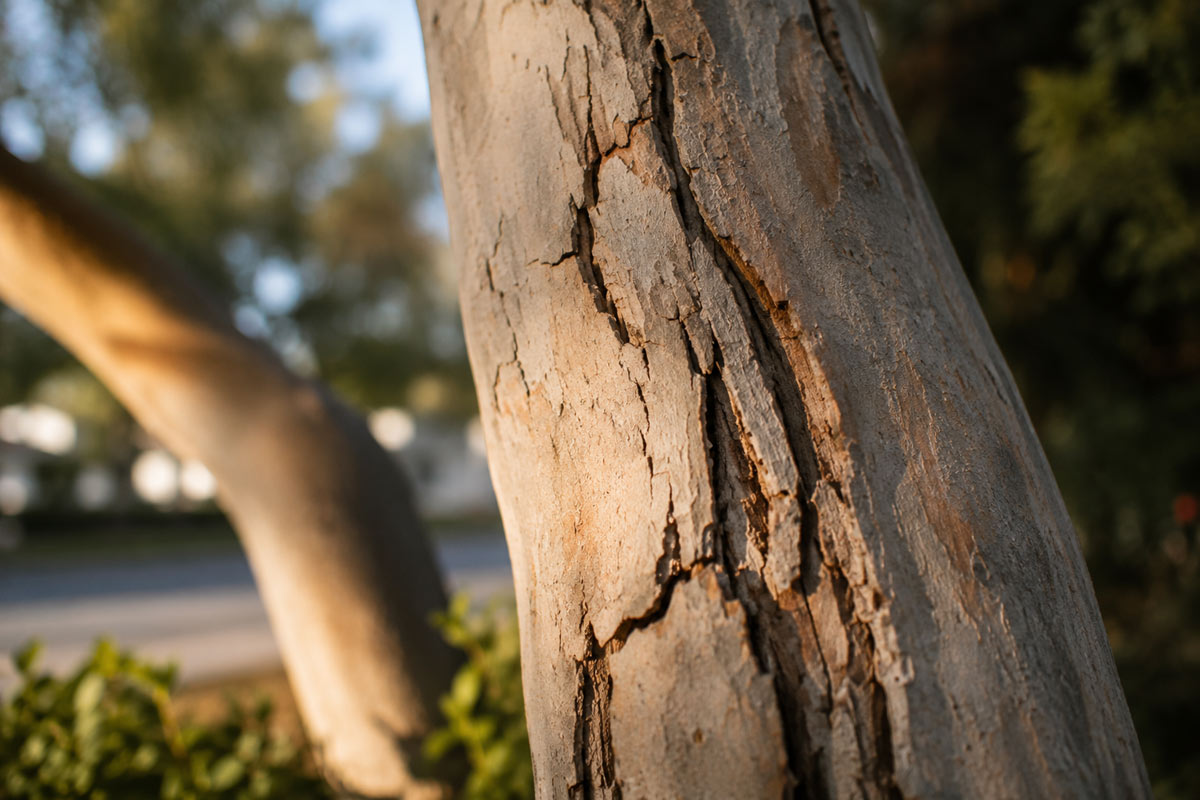
Some shallow surface cracks are perfectly normal as trees mature. However, deep vertical cracks, long splits, or areas where the wood appears exposed may indicate internal structural weakness.
In some cases, these cracks develop after extreme heat causes rapid expansion and contraction. In others, strong winds, heavy limbs, previous storm damage, or internal decay are to blame.
The concern isn’t simply the appearance of the crack. Rather, it’s what may be happening inside the tree where hidden decay can weaken its structural integrity.
If the crack continues growing, begins separating, or leaks sap, it’s time to schedule an inspection with a certified arborist at LC Tree Service.
WARNING SIGN #11
THE TREE STARTS DROPPING BRANCHES WITHOUT WIND
It’s normal for trees to shed an occasional twig. However, healthy branches shouldn’t suddenly fall on calm days.
This condition, sometimes called “sudden limb drop,” often surprises homeowners because the tree may appear perfectly healthy from a distance. San Diego’s eucalyptus trees are the biggest culprits of this hazard, which is why any eucalyptus on your property should be professionally maintained.
Whether dealing with a eucalyptus or another tree species, several factors can contribute to unexpected branch failure. Internal decay, drought stress, excessive limb weight, and structural defects are among the most common causes.
Besides indicating declining tree health, falling limbs create obvious safety concerns around homes, driveways, patios, and sidewalks.
If your tree has begun dropping branches for no apparent reason, don’t assume it’s just getting older. Instead, have the tree evaluated before a larger limb falls or someone gets hurt.
WARNING SIGN #12
CAVITIES OR HOLLOW AREAS ARE DEVELOPING
Many people assume a hollow tree is automatically dangerous. While that’s not always true, large cavities shouldn’t be ignored.
Trees can survive for years with some internal decay. Nevertheless, the amount and location of that decay determine whether the tree remains structurally sound. For instance, a small cavity in a large mature oak may not significantly affect stability. On the other hand, extensive decay near the base of the trunk could greatly increase the risk of failure.
Because internal decay isn’t always visible from the outside, certified arborists often use specialized assessment techniques to evaluate the tree’s structural condition.
Ultimately, every hollow tree should be evaluated individually rather than judged by appearance alone.
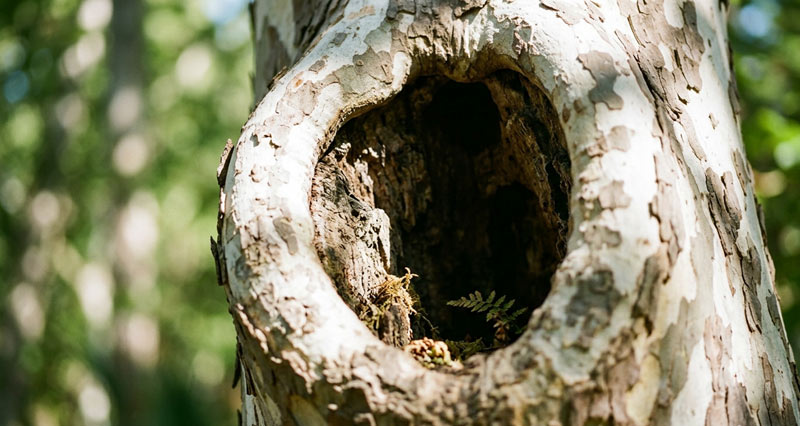
Large cavities are the result of decay and can compromise the structural integrity of a tree.
WARNING SIGN #13
THE TREE FLOWERS OR FRUITS POORLY
Many ornamental and fruit trees provide reliable blooms year after year. Therefore, a sudden decline in flowering or fruit production may indicate declining health.
Although weather can influence flowering, consistent reductions over multiple seasons often point to underlying stress. Nutrient deficiencies, root problems, poor pruning practices, and chronic drought can all reduce the tree’s ability to produce flowers and fruit.
If your flowering tree suddenly looks less vibrant than it did in previous years, it may be asking for help long before more serious symptoms appear.
WARNING SIGN #14
THE TREE DOESN’T RECOVER AFTER SUMMER
San Diego summers—especially more inland—are demanding on every landscape.
Even healthy trees may appear tired during periods of extreme heat. However, they should begin recovering once temperatures moderate and deep watering resumes. If your tree still looked wilted, sparse, or discolored well into the fall, there’s likely a deeper issue affecting its health.
Extended drought stress weakens trees over time, making them more vulnerable to insects, fungal diseases, and branch dieback. Consequently, what begins as seasonal stress can gradually become permanent decline if nothing changes.
Helping a tree recover after summer often involves much more than simply adding water. Soil conditions, irrigation methods, root health, and pruning history all play important roles in a tree’s health.

CAN A SICK TREE BE SAVED?
One of the most common questions homeowners ask is whether a sick tree can actually recover.
The answer is encouraging: many trees absolutely can.
Trees are remarkably resilient. Once the underlying cause of stress is identified, they often respond very well to proper care. Improving irrigation, correcting soil issues, removing dead wood, treating pests, or addressing disease can dramatically improve a tree’s long-term health.
However, timing matters.
The longer a tree remains under stress, the harder it becomes to reverse the damage. Eventually, decline reaches a point where tree removal becomes the safest and most practical option.
That’s why early diagnosis is so valuable. Small problems are almost always easier—and less expensive—to address than major structural failures.
WHAT YOU SHOULD DO IF YOU THINK YOU HAVE A SICK TREE
If you notice one or more of these warning signs, avoid making drastic decisions right away.
Many homeowners assume a tree needs to be remvoed when it actually needs professional tree care. Others wait far too long, hoping the tree will recover on its own.
Instead, begin by observing the changes. Consider when the symptoms first appeared, whether nearby construction occurred recently, how the tree has been watered, and whether the symptoms have become worse over time.
Afterward, have the tree inspected by a knowledgeable, certified arborist who can identify the true cause instead of simply treating the symptoms. That professional evaluation can often make the difference between preserving a beautiful mature tree and losing it unnecessarily.
HEALTHY TREES ADD VALUE TO YOUR PROPERTY
Healthy trees do far more than provide shade.
They increase curb appeal, improve property value, reduce cooling costs, support local wildlife, and make outdoor spaces more enjoyable throughout the year. Mature trees also take decades to replace, making proper care a worthwhile investment.
Conversely, neglected trees can become expensive liabilities. Dead limbs, declining health, and hidden structural defects may eventually threaten homes, vehicles, fences, and even the people you care about.
Routine insepctions are one of the simplest ways to catch small issues before they become major problems.

TRUST LC TREE SERVICE TO DIAGNOSE AND CARE FOR YOUR TREES
If you’ve noticed any of these warning signs, don’t wait until the problem becomes more serious. The sooner a tree is evaluated, the more treatment options are usually available.
At LC Tree Service, our certified arborists have extensive experience diagnosing sick trees throughout San Diego County. From drought stress and root problems to insect infestations and tree diseases, we understand the unique challenges that Southern California trees face every day.
More importantly, we believe in giving honest recommendations. If a tree can be saved, we’ll explain the best course of action. If removal is the safest option, we’ll help you understand why and complete the work safely and professionally.
As a disabled-veteran-owned business, we’re proud to serve homeowners, property managers, and businesses with integrity, professionalism, and exceptional customer service. That commitment has earned us numerous 5-star reviews from satisfied customers across San Diego County who trust us with their valuable trees.
Whether your tree simply needs expert care or you’re concerned about a potential safety hazard, our team is ready to help.