Beautiful Rancho Santa Fe in San Diego County is known for its breathtaking landscapes, sprawling estates, and mature trees that have become landmarks in their own right. Towering coast live oaks, elegant eucalyptus, stately sycamores, and ornamental trees create the beautiful canopy that makes the community one of Southern California’s most affluent and desirable places to live. However, even the healthiest-looking trees can fall victim to disease if problems aren’t caught early.
Fortunately, many tree diseases can be managed or even prevented with proper care and regular inspections. Just like people benefit from annual dental and medical checkups, trees thrive when they’re monitored by experienced professionals who know what to look for before minor issues become major problems.
As with the rest of Southern California, Rancho Santa Fe’s unique climate presents both advantages and challenges for tree health. Warm temperatures encourage growth throughout much of the year, but periods of drought, occasional heavy rains, compacted soil, and irrigation issues can create conditions in which diseases flourish.
Whether you’re caring for one magnificent oak or an entire grove of mature trees, understanding the most common diseases in this region can help protect your investment.
Below are five tree diseases that every Rancho Santa Fe property owner should know about.

1.
OAK ROOT FUNGUS
Coast live oaks are among Rancho Santa Fe’s signature trees, making Oak Root Fungus one of the most concerning diseases for local property owners. This fungal disease attacks the root system, gradually weakening trees from the ground up.
Unlike many diseases that begin on the leaves, Armillaria often starts below the soil surface, where homeowners can’t easily see it. By the time symptoms appear above the ground, the fungus may have already caused significant damage.
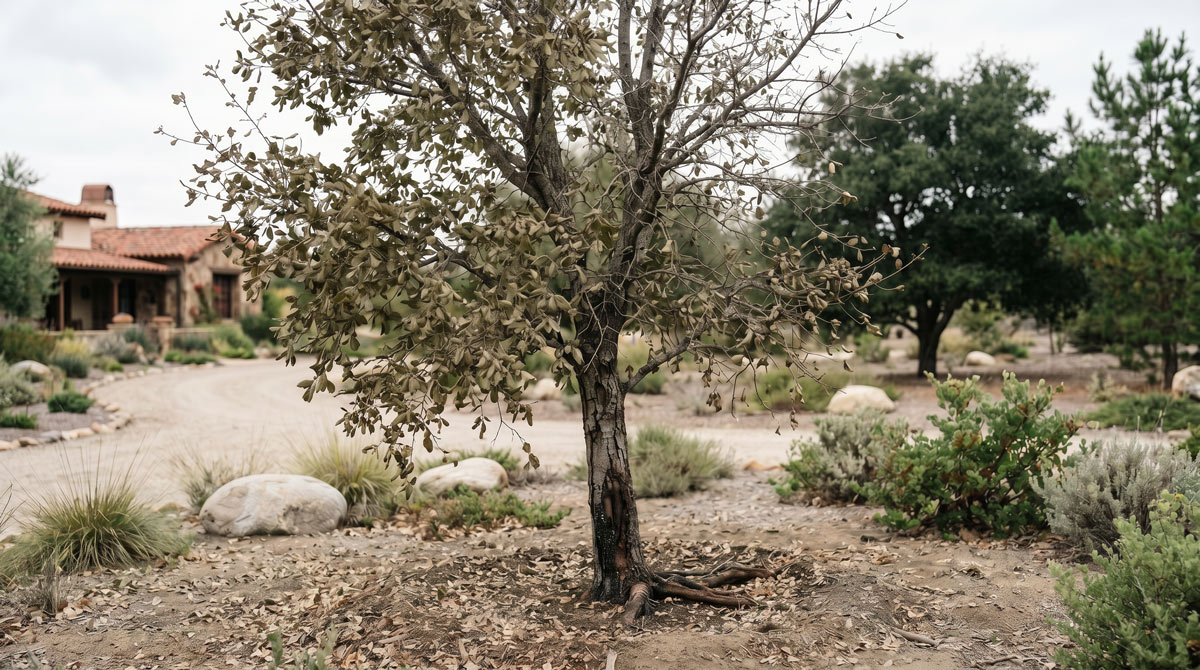
Common symptoms include thinning canopies, yellowing leaves, unusually small foliage, dead branches, and slowed growth. In severe cases, mushrooms may appear around the tree’s base during cooler, wetter months. White fungal growth beneath loose bark near the root collar is another telltale sign.
Meanwhile, drought stress often makes oak trees more vulnerable. Trees that receive inconsistent irrigation or suffer root damage during construction are particularly susceptible.
Unfortunately, there is no simple cure once the fungus has extensively colonized the roots. However, early diagnosis allows arborists to improve drainage, reduce stress on the tree, and extend its life in many cases. Severely infected trees may eventually require removal to prevent hazards.
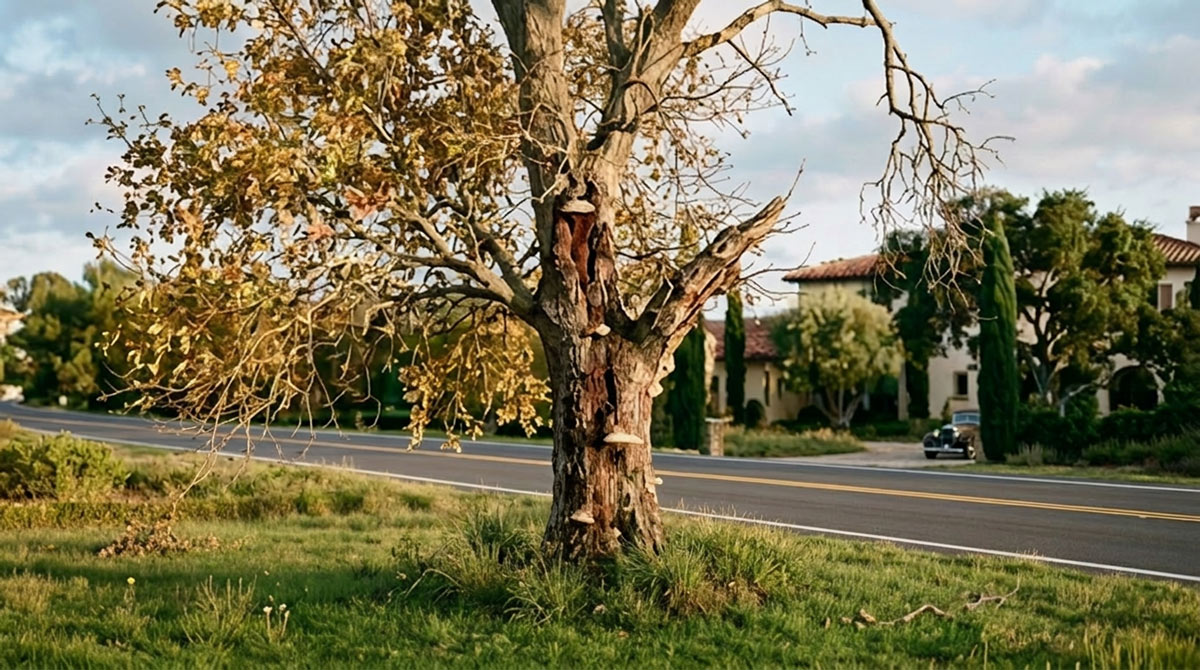
Signs of oak root fungus include pale, wilting foliage, canopy dieback, and light brown-colored mushrooms.
2.
ANTHRACNOSE
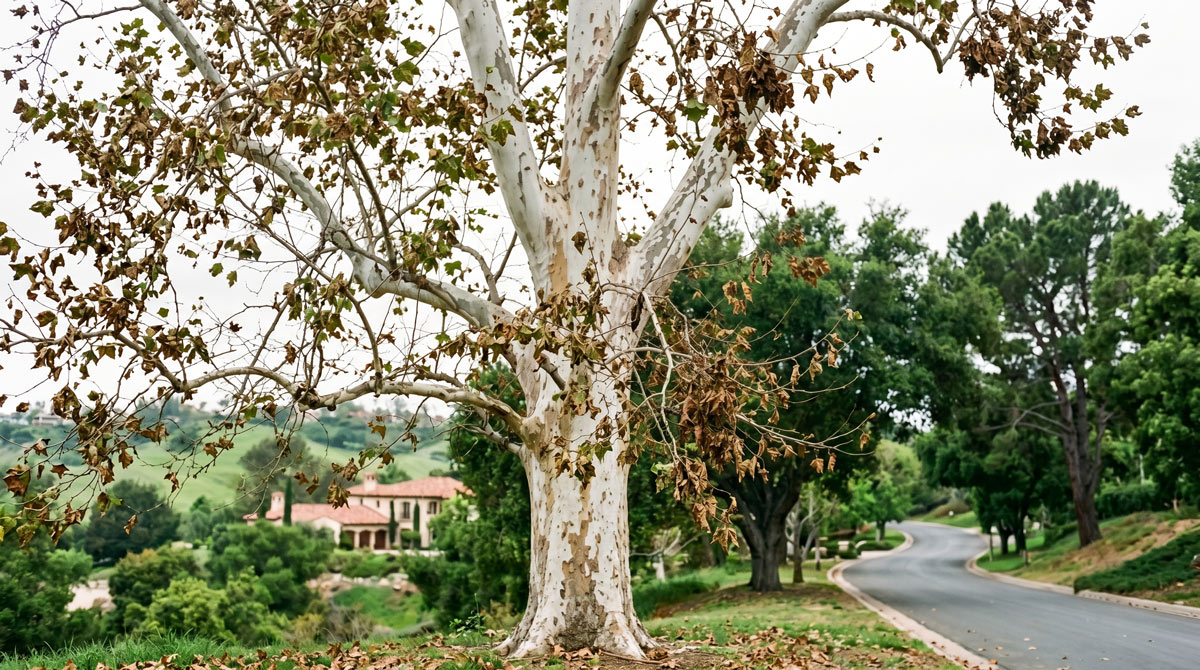
If you’ve ever noticed leaves turning brown seemingly overnight during cool, wet weather, anthracnose may be the culprit. This fungal disease affects many tree species commonly found throughout Rancho Santa Fe, including sycamores, ash trees, maples, and ornamental shade trees.
Anthracnose typically begins in spring when moisture remains on developing leaves for extended periods. The fungus infects tender new growth, causing irregular brown patches, curled leaves, and premature leaf drop.
Consequently, homeowners often mistake anthracnose for drought stress or insect damage. Fortunately, healthy trees usually recover later in the growing season by producing a second flush of leaves.
Proper pruning plays an important role in prevention. Increasing airflow through the canopy allows foliage to dry more quickly after rain or irrigation. Removing infected branches also reduces the amount of fungal spores available to spread the following season.
Good sanitation is equally important. Fallen leaves should be collected and removed because they can harbor fungal spores that infect the tree the following year.
3.
POWDERY MILDEW
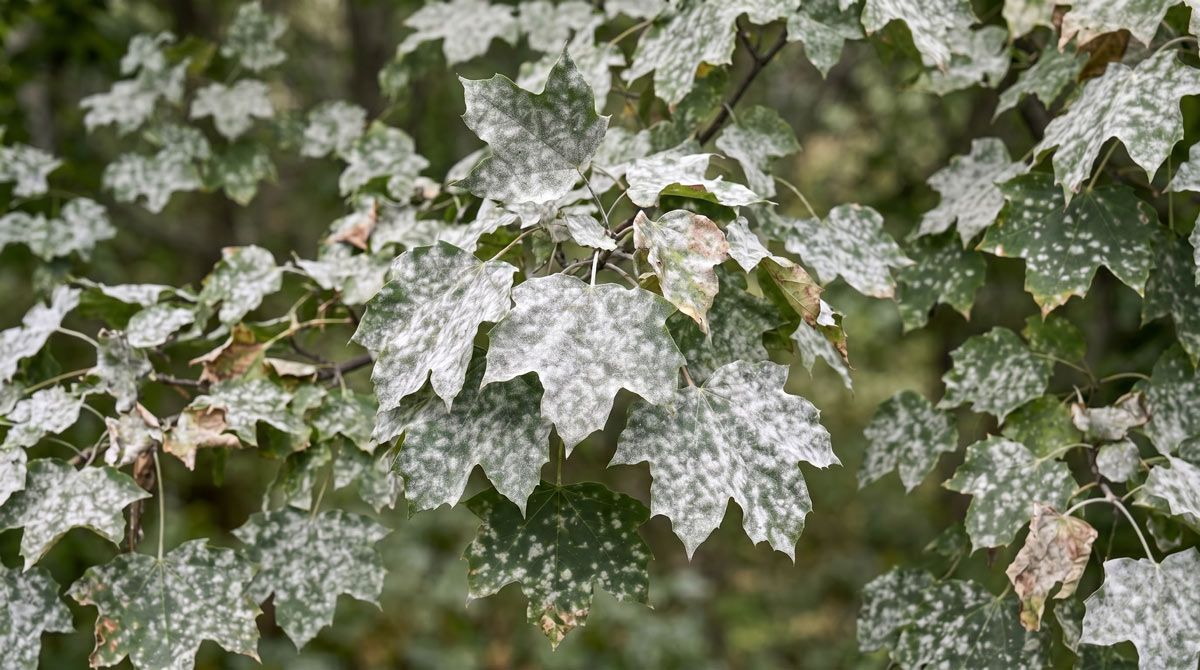
Powdery mildew may sound harmless, but this common fungal disease can dramatically reduce the beauty of ornamental trees and shrubs. Fortunately, it’s one of the easiest diseases to recognize thanks to its distinctive white, powder-like coating on leaves and young shoots.
Unlike many fungi that require standing water, powdery mildew actually thrives during periods of high humidity combined with dry foliage. Rancho Santa Fe’s coastal influence creates ideal conditions during certain times of the year. Also, trees growing in shaded areas with poor air circulation are much more likely to develop infections.
Symptoms include white patches on leaves, curled or distorted new growth, stunted shoots, and early leaf drop. While mature trees rarely die from powdery mildew, repeated infections reduce vigor and detract from the overall appearance of your landscape.
Luckily, proper pruning often makes a significant difference. Increasing sunlight penetration and improving airflow help create conditions that are favorable for fungal growth.
Maintaining overall tree health through proper watering and fertilization also improves natural resistance. Trees under stress are generally much more susceptible to recurring infections.
4.
BOTRYOSPHARERIA CANKER
Botryosphaeria canker is one of those diseases that quietly takes advantage of trees already dealing with stress. Whether caused by drought, heat, poor pruning practices, soil compaction, or construction damage, weakened trees become prime targets for this aggressive fungal disease.
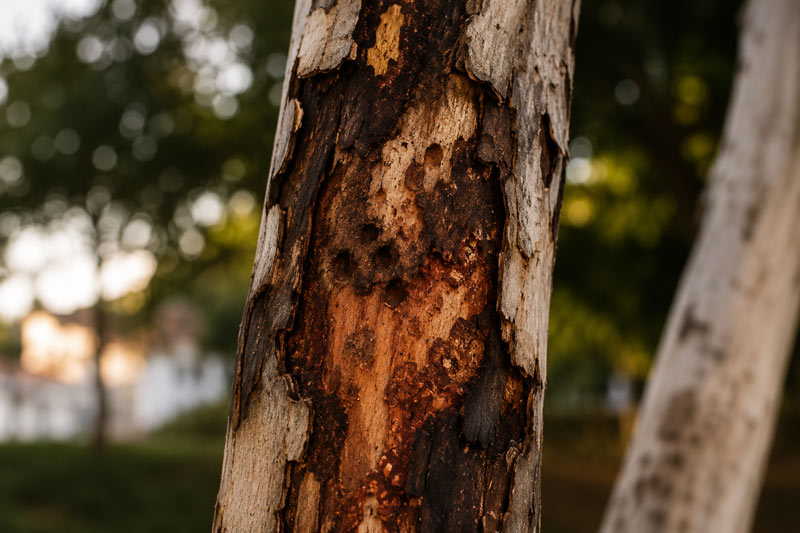
The fungus enters through wounds in the bark and gradually kills sections of branches and stems. As a result, homeowners may notice individual limbs suddenly dying while the remainder of the tree appears healthy. Cracked bark, sunken cankers, peeling bark, and dark discoloration often develop around infected areas. Many ornamental trees, eucalyptus, sycamores, and various landscape species are susceptible.
Early pruning of infected limbs often prevents the disease from spreading farther into the tree. However, pruning should always be performed correctly and with sanitized equipment to avoid introducing additional pathogens.
Likewise, reducing environmental stress remains one of the best long-term defenses. Healthy trees have a far greater ability to compartmentalize wounds and resist infection than stressed trees.
Signs of the bot canker include cracked and peeling bark, cankers, and dark discoloration.
5.
PHYTOPHTHORA ROOT ROT
Although Southern California is known for dry weather, overwatering frequently causes more tree problems than underwatering. Phytophthora root rot develops when saturated soils deprive roots of oxygen, creating perfect conditions for water mold pathogens. This disease commonly affects ornamental trees, fruit trees, and many landscape species throughout Rancho Santa Fe.
Symptoms often appear gradually. Leaves become pale green or yellow, growth slows noticeably, branches begin dying back, and the tree gradually declines over several seasons. Unfortunately, many homeowners respond by adding even more water, which only accelerates the disease.
Proper irrigation management is essential. Deep, infrequent watering encourages healthier root systems than frequent shallow irrigation. Improving drainage and avoiding excessive mulch buildup around the trunk also reduces disease risk. Professional diagnosis by a certified arborist is particularly valuable because root diseases can resemble nutrient deficiencies, insect infestations, or drought stress.
HOW TO KEEP TREES HEALTHY YEAR-ROUND
The good news is that most serious tree diseases don’t appear overnight. Trees often show subtle warning signs months or even years before they become hazardous. Therefore, routine inspections remain one of the smartest investments for Rancho Santa Fe property owners. Catching problems early frequently saves both the tree and thousands of dollars in future removal costs.
Healthy trees also begin with proper maintenance. Correct pruning improves airflow, removes dead or diseased limbs, reduces structural defects, and encourages vigorous new growth. At the same time, appropriate irrigation helps trees develop strong, resilient root systems capable of withstanding drought and disease pressure.
Protecting the root zone during landscaping projects is often overlooked because “out of sight, out of mind.” But heavy equipment, trenching, and soil compaction can severely damage or suffocate roots—leaving trees vulnerable to pathogens long after construction ends.
It’s also important to remember that every species has different care requirements. Coast live oaks, eucalyptus, sycamores, jacarandas, and ornamental trees all respond differently to watering, pruning, and seasonal changes. A customized maintenance plan provides far better results than treating every tree the same way.

PROTECT YOUR RANCHO SANTA FE TREES WITH LC TREE SERVICE
Your trees represent more than beautiful landscaping—they’re valuable assets that enhance your property’s appearance, increase curb appeal, provide shade, and contribute to the character of Rancho Santa Fe. If you’ve noticed thinning foliage, dead branches, unusual leaf discoloration, or other signs of declining tree health, don’t wait until the problem becomes irreversible.
LC Tree Service provides tree inspections, expert pruning, disease management, tree removal, and comprehensive tree care throughout Rancho Santa Fe and the greater San Diego area. Our experienced team of knowledgeable certified arborists understands the unique challenges local trees face and can recommend customized solutions that keep your landscape healthy for years to come.
Whether you need preventative maintenance or immediate assistance with a declining tree, contact LC Tree Service today to schedule an inspection. Healthy trees don’t happen by accident—they thrive with expert care from professionals who know exactly what your landscape needs.