Managing a homeowners association or commercial property sometimes feels like a never-ending game of priorities. One day you’re coordinating roof repairs, the next you’re responding to resident concerns about parking, landscaping, or lighting. And somewhere in the middle of all that, the trees quietly continue growing.
That’s usually a good thing, unless they’re left to grow wild and untamed.
Healthy, mature trees are one of the greatest assets a community can have. They provide shade during San Diego’s warm summers, improve curb appeal, increase property values, reduce heat around buildings, and make neighborhoods feel welcoming. In fact, beautiful trees are often one of the first things prospective homeowners notice when they visit a community.
However, trees also have a funny way of reminding us they’re alive. Roots don’t stop growing because there’s a sidewalk above them. Branches don’t check calendars before falling during a windstorm. And unfortunately, trees don’t send friendly reminder emails saying, “You might want to trim me before I become expensive.”
The good news is that most tree-related expenses don’t happen overnight. More often than not, they’re the result of small problems that went unnoticed or were postponed for another budget cycle.
Fortunately, that’s also what makes them preventable.
By recognizing the most common issues early and partnering with a reliable San Diego commercial tree service, property managers and HOA boards can avoid emergency repairs, reduce liability, and protect one of their community’s most valuable landscape investments.
Let’s look at the ten 10 tree problems that quietly drain HOA budgets—and what you can do before they become tomorrow’s emergency.
1.
DEAD OR OVERGROWN BRANCHES
Have you ever noticed how tree emergencies don’t seem to happen on a quiet Tuesday morning?
Instead, they happen during a holiday weekend, after business hours, or just before an important community event. Dead branches are especially good at waiting for terrible timing.
From the ground, many hazardous limbs appear perfectly healthy. Inside, however, decay may already be weakening the wood. Add a little wind, saturated soil, or the extra weight of winter rain, and suddenly that branch is lying across several parked cars.
Tree trimming isn’t just about appearance—it’s one of the simplest ways to reduce liability while extending the life of valuable trees.
Throughout San Diego, large limbs commonly fall onto:
- Parked vehicles
- Clubhouses
- Roofs
- Playgrounds
- Walkways
- Fences
Besides property damage, falling limbs present a serious liability risk if someone is injured.
Additionally, overgrown branches can interfere with lighting, security cameras, signage, and pedestrian walkways. Trees that become too dense may also block visibility for drivers entering or leaving the community. Most—if not all—people can say that they’ve experienced difficulty driving out of a property because an overgrown tree or shrub blocked their view of oncoming traffic.
What’s the solution to all of these issues? Routine pruning.
Hazardous limbs should be removed before they become emergencies. Whereas overgrown limbs are trimmed before they become a burden.
Also, scheduled maintenance almost always costs significantly less than emergency removals and insurance claims, which is always a plus.
2.
SIDEWALK DAMAGE FROM TREE ROOTS
While falling branches grab attention, some of the most expensive tree problems happen below ground. Tree roots naturally spread in search of water and oxygen. Unfortunately, sidewalks, curbs, pathways, and parking lot edges often end up directly in their paths.
At first, residents may barely notice a small crack.
Then the sidewalk begins to lift.
Soon, someone trips.
Now the HOA is discussing replacement, insurance concerns, and legal liability.
Some tree species have more invasive roots than others. Read “The Most Destructive Roots in San Diego” for more information. This is why proper tree selection, early root management, and periodic inspections greatly reduce the likelihood of major sidewalk damage. Moreover, catching root conflicts early may allow corrective pruning before concrete replacement becomes necessary.
The earlier these issues are identified, the more options property managers typically have.
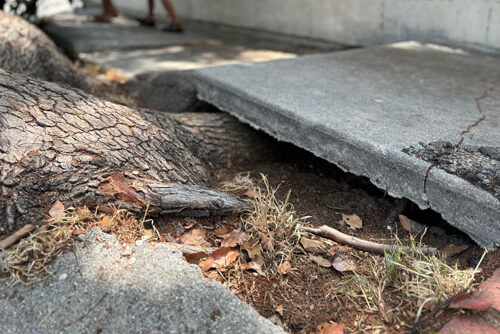
Tree root issues lead to expensive repairs. But these can be avoided by using root barriers or strategic landscape planning.
3.
EMERGENCY TREE REMOVALS AFTER STORMS
Although San Diego enjoys relatively mild weather, winter storms occasionally bring heavy rain and strong winds. As one would expect, trees that haven’t been maintained are much more likely to fail during these events. Waiting until a tree emergency occurs should always try to be avoided because not only are emergency situations dangerous, but they are also more costly.
Emergency removals are expensive because they often involve:
- Immediate response
- Traffic control
- Specialized equipment
- Crane work
- Hazard mitigation
- Weekend or after-hours scheduling
Each of these factors increases the cost. Compare that to a tree that was inspected and properly trimmed several months earlier. The difference can be dramatic.
It’s wise to think of preventative pruning like changing the oil in your vehicle. It may not seem exciting today, but it helps prevent much larger problems tomorrow.
4.
TREES BECOMING FIRE HAZARDS
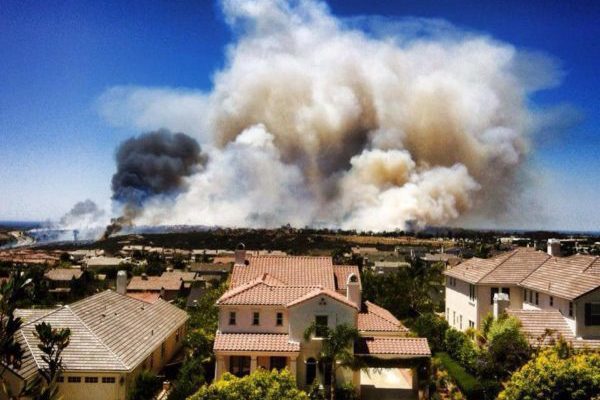
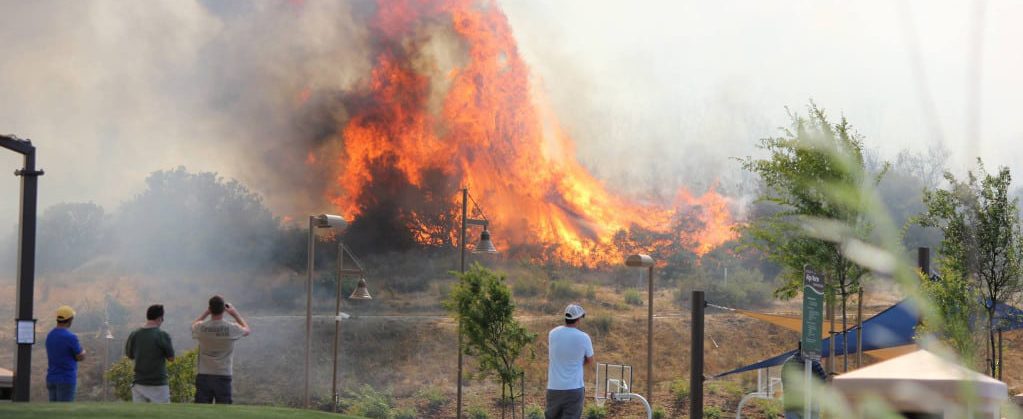
Unfortunately, wildfire is a reality for many communities throughout San Diego County. While defensible space often focuses on shrubs and groundcover, trees can also become significant fire hazards when they’re not properly maintained.
Certain species are naturally more combustible than others. For example, eucalyptus trees contain highly flammable oils that can ignite quickly and produce embers capable of traveling long distances in strong winds. Likewise, pine trees accumulate dry needles and resin, while neglected palms with a lovely dry skirt of dead fronds can easily catch fire. Even otherwise healthy trees can contribute to wildfire intensity if dead branches and excessive vegetation are allowed to build up.
Some of the most common fire-prone trees found on San Diego commercial properties include:
- Eucalyptus
- Monterey pine
- Italian cypress
- Palms with untrimmed dead fronds
- Junipers
- Acacias with excessive deadwood
Fortunately, many fire risks can be significantly reduced through routine maintenance. Strategic tree trimming removes dead limbs, raises tree canopies away from vegetation below, and reduces the amount of combustible material that can fuel a fire. Additionally, removing dead branches and maintaining proper spacing between trees helps slow the spread of flames should a wildfire reach the property.
Beyond improving fire safety, proactive tree maintenance also enhances tree health, increases aesthetics, and helps properties comply with defensible space recommendations where applicable.
For HOAs and property managers, preparing trees before fire season is one of the smartest investments you can make. A little preventative maintenance today can help protect buildings, residents, and valuable mature trees when wildfire conditions become more severe.
5.
POOR TREE HEALTH LEADING TO EXPENSIVE REMOVALS
Trees are remarkably resilient.
In fact, they’ll often continue standing for years while quietly struggling beneath the surface. That’s why declining trees are easy to overlook.
Early symptoms may include:
- Thinning canopies
- Dead upper branches
- Cracking bark
- Mushrooms near the base
- Excessive leaf drop
- Slow new growth
Individually, these signs may seem insignificant. Together, however, they’re often telling a different story. Regular inspections can identify problems caused by drought stress, compacted soil, insects, disease, irrigation issues, or root damage before they become irreversible.
Saving a mature tree is typically more affordable than removing it, grinding the stump, purchasing a replacement, and waiting years for that new tree to provide the same beauty and shade.
So if you really think about it—Healthy trees are investments worth protecting.
6.
BLOCKED SECURITY CAMERAS AND LIGHTING
Not every tree issue involves broken branches. Sometimes trees simply grow exactly as nature intended. Then, before you know it, branches begin blocking security cameras, streetlights, parking lot lighting, community signs, and even entrance monuments.
Residents may start mentioning that certain walkways feel darker.
Security camera footage becomes less effective.
Drivers have trouble seeing pedestrians at intersections.
These aren’t dramatic failures, but they can gradually affect safety and resident satisfaction.
Strategic tree trimming restores visibility without sacrificing the natural beauty that mature trees provide. Sometimes improving community security is as simple as allowing lights and cameras to do their jobs again.
7.
PARKING LOT DAMAGE
Parking lots are busy places. Residents come and go throughout the day, delivery trucks arrive, landscapers work nearby, and visitors constantly move through the property.
Now imagine adding neglected trees to that environment.
Large branches threaten parked vehicles.
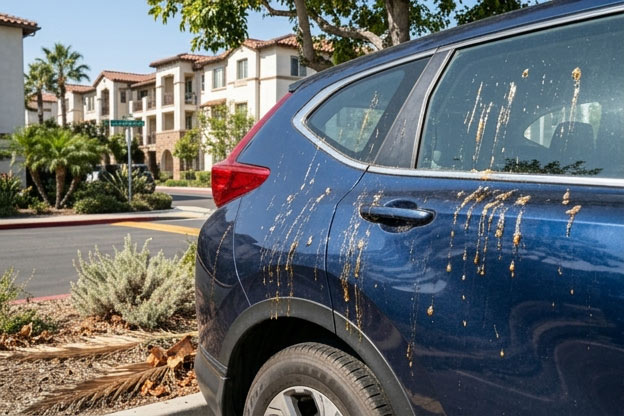
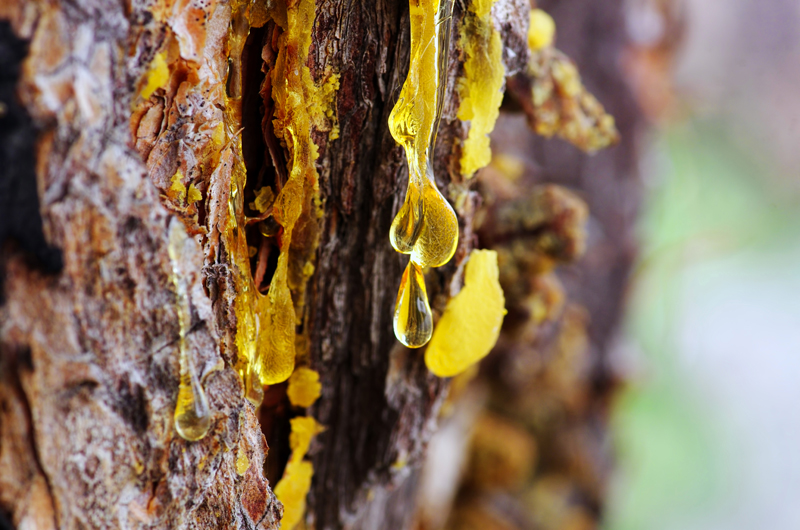
Sticky sap coats freshly washed cars.
Palm seed pods become clipping hazards.
Roots crack asphalt.
Leaves clog drains.
Individually, none of these issues may seem overwhelming. Together, though, they create ongoing maintenance expenses that slowly chip away at the budget or upset residents.
For example, when an untrained arborist trims pine trees that line the parking lot during the wrong time of the year, the result is sap drippings on parked vehicles and throughout the lot. Not only is the sap a pain to clean when it’s fresh, but it’s also an extra pain to clean when it’s dry.
Thankfully, routine pruning and inspections by skilled and knowledgeable arborists, such as those at LC Tree Service, help keep parking areas cleaner, safer, and easier to maintain throughout the year.
8.
OVERGROWN TREES INVITE UNWANTED GUESTS
No HOA wants to surprise residents.
Unfortunately, neglected trees can become excellent homes for insects, rodents, and other pests.
For instance, when a boring beetle attacks a healthy tree, the tree’s defense system is strong enough to stop the invasion. However, when a weak tree is attacked, the pest can easily succeed and releases a pheromone to let its buddies know that a good home has been found.
Also, dead wood and declining trees provide excellent habitat for numerous pests, including termites, bark beetles, rodents, and certain ant species.
Additionally, overgrown canopies touching roofs can provide easy access for rodents seeking entry into buildings.
However, routine tree care helps eliminate many of these conditions before pest populations become established. Healthy trees are naturally more resistant to insect activity, making preventative care more valuable.
9.
DEFERRED MAINTENANCE CREATES BUDGET SURPRISES
Every HOA board faces difficult budget decisions. It’s understandable to postpone projects that don’t appear urgent—and tree maintenance often falls into that category.
But trees don’t pause their growth while budgets catch up.
A branch that needed simple pruning today may require an emergency removal next year.
A minor root conflict can eventually become thousands of dollars in sidewalk repairs.
Likewise, a tree showing early signs of decline may become hazardous before the next inspection.
Deferred maintenance rarely eliminates expenses. More often, it simply moves them into a larger, less predictable category. That’s why planning annual tree maintenance allows communities to spread costs over time while avoiding unpleasant financial surprises.
Your future budget will thank you.
10.
LIABILITY CAN BECOME THE MOST EXPENSIVE PROBLEM OF ALL
At the end of the day, the greatest financial risk isn’t always the damaged tree. It’s what happens after someone gets hurt.
HOAs and commercial property owners have a responsibility to maintain reasonably safe common areas. If an avoidable tree failure causes injuries or significant property damage, legal costs can quickly exceed years of preventative maintenance.
Routine tree inspections, documented recommendations by a certified arborist, and scheduled maintenance demonstrate that the community is actively managing its landscape.
More importantly, they help protect residents. After all, the goal isn’t simply avoiding lawsuits—it’s making sure everyone can enjoy the property safely.

A PROACTIVE PLAN IS ALWAYS LESS EXPENSIVE THAN A REACTIVE ONE
One of the biggest differences between well-managed communities and constantly stressed communities isn’t the size of their budget. It’s planning.
Communities with long-term tree management programs experience fewer emergencies, fewer resident complaints, more predictable expenses, and healthier landscapes. Instead of reacting to the loudest problem each month, they steadily reduce risk before problems develop. That’s a strategy every board member can appreciate.
WHY PARTNER WITH LC TREE SERVICE
Whether you manage a condominium community, apartment complex, business park, school campus, or homeowners association, having a trusted tree care partner makes all the difference.
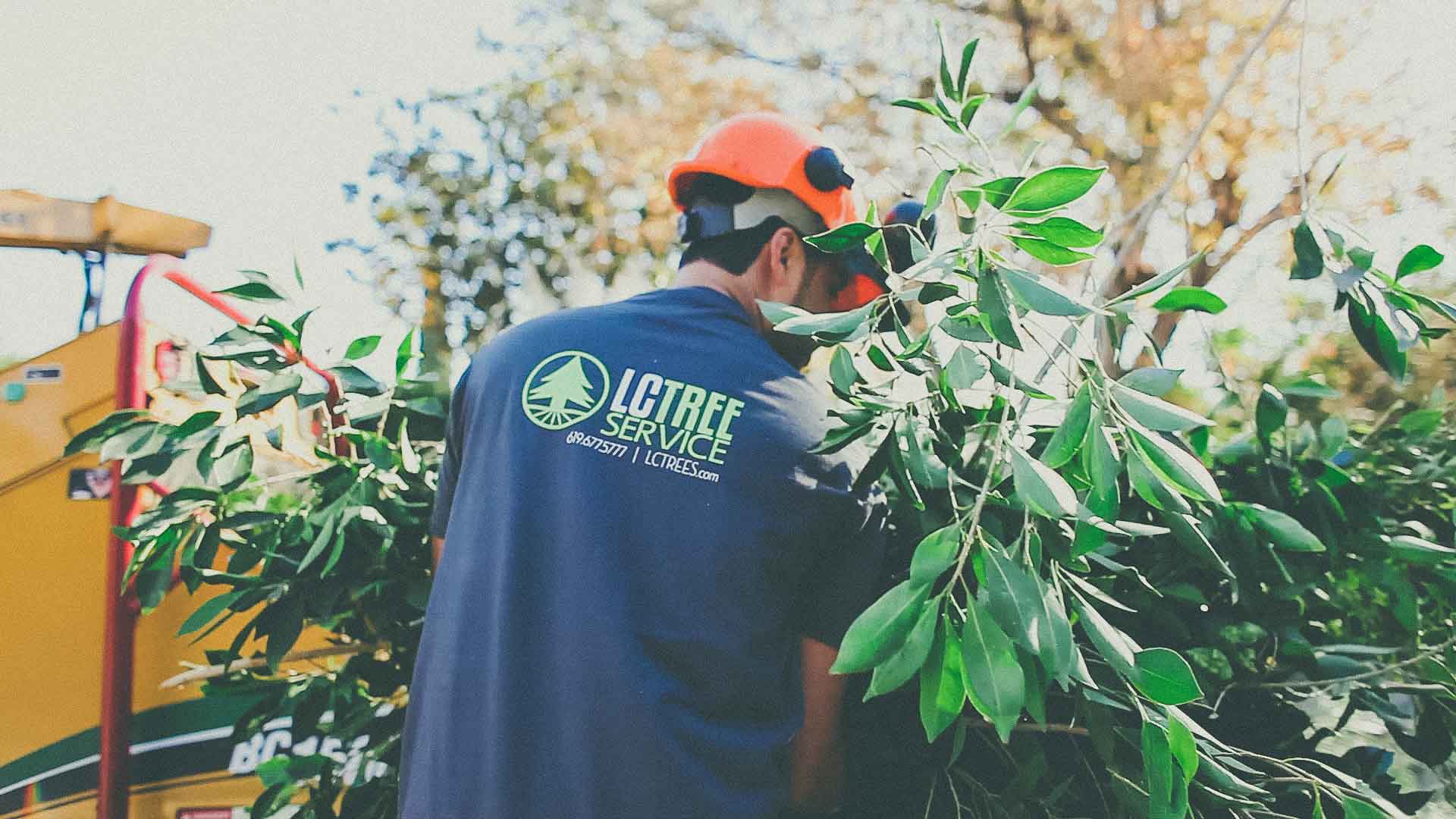
LC Tree Service proudly provides professional San Diego commercial tree service and San Diego tree service solutions throughout San Diego County. From routine tree trimming and tree health evaluations to emergency removals, fire-season preparation, and long-term maintenance plans, our experienced team helps property managers protect their landscapes while reducing costly surprises.
As a disabled-veteran-owned business, we understand the importance of reliability, clear communication, and doing the job right the first time. We work closely with HOA boards, community managers, municipalities, and commercial property owners to create customized maintenance plans that fit both operational needs and budgets.
If your community is ready to stop reacting to tree problems and start preventing them, contact LC Tree Service today. Together, we can help keep your property safer, healthier, and looking its best—while helping your maintenance budget go a whole lot further.