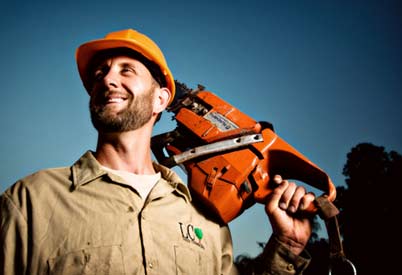
If you’ve been staring at a sickly tree in your yard and wondering whether it’s beyond saving, you’re certainly not alone. This is one of the most common questions San Diego residents ask after noticing brown leaves, dead branches, peeling bark, or a tree that simply doesn’t look as healthy as it used to. Although it’s easy to assume the worst, many trees can recover when problems are identified early and treated correctly.
At LC Tree Service, we’ve inspected thousands of trees throughout San Diego County. In many cases, homeowners are surprised to learn that what appears to be a sick tree is actually suffering from a problem that can be corrected with proper care. On the other hand, there are situations where a tree has become unsafe, and removal is the responsible choice. The key is knowing the difference before the damage becomes irreversible.
This guide explains how Certified Arborists evaluate unhealthy trees, what treatment options may be available, and when tree removal becomes the safest solution. Most importantly, you’ll learn why getting an expert opinion early can often save both your tree and your wallet.
Every Sick Tree Has a Story
Trees rarely become unhealthy overnight. Instead, they usually decline gradually after months or even years of stress. While property owners and managers often notice the symptoms above ground, the underlying cause may have started below the soil long before any leaves turned brown.
San Diego presents unique challenges for trees because of its warm climate, prolonged dry seasons, compacted soils, and periodic heat waves. In addition, many landscape trees grow in areas that were never part of their natural environment. Consequently, even mature trees can struggle if irrigation, soil conditions, or maintenance practices are less than ideal.
Fortunately, many of these problems can be corrected when they’re identified early. That’s why scheduling an inspection with a San Diego Certified Arborist is often the first step toward preserving a valuable tree.
Why Trees Become Sick in San Diego
Unlike many parts of the country, San Diego trees deal with long periods of dry weather followed by occesional heavy rain. As a result, tree roots can experience repeated cycles of drought stress and oversturation. Over time, this weakens the tree’s natural defenses and make sit more vulnerable to insects and disease.
Improper watering is antoher common issue. Some residents water too frequently, while others don’t water deeply enough for mature trees. Although both approaches are well-intentioned, they can create root problems that eventually lead to a dying tree.
Construction projects also take a toll on tree health. Trenching, new patios, driveways, and even foot traffic can compact soil or damage roots without anyone realizing it. Because tree roots often extend far beyond the canopy, work performed several feet away can still have serious consequences.
Poor pruning is another factor that certified arborists encounter regularly. Removing too much foliage or making improper cuts forces a tree to spend valuable energy recovering instead of growing. Therefore, routine pruning should always be performed with the tree’s long-term health in mind rather than simply improving its appearance.
Common Signs That Your Tree May Be In Trouble
Every tree species looks a little different, but unhealthy trees often display similar warning signs. While one symptom doesn’t necessarily mean a tree is dying, multiple symptoms appearing together deserve professional attention. The sooner you identify a problem, the more treatment options are usually available.
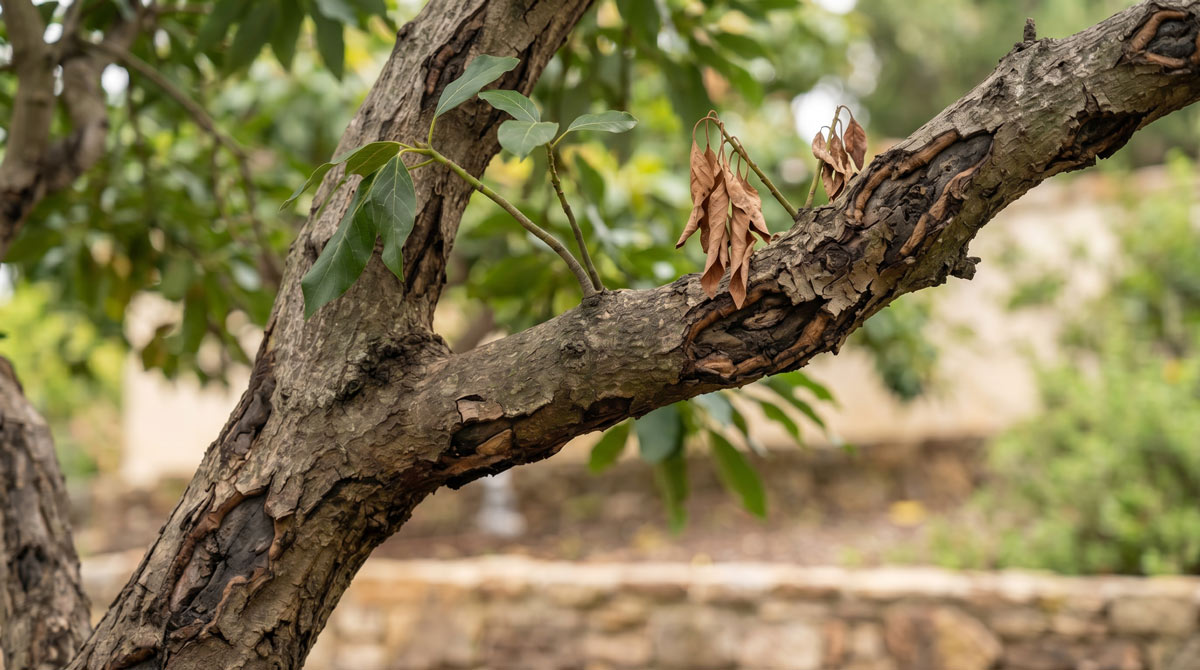
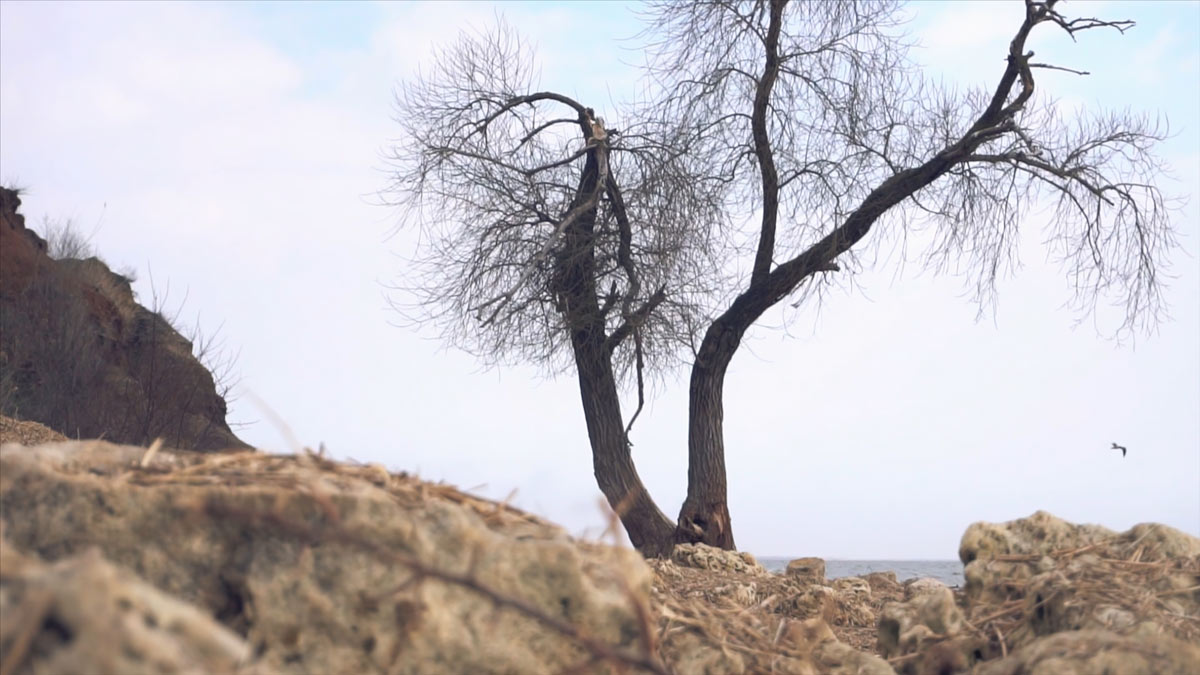
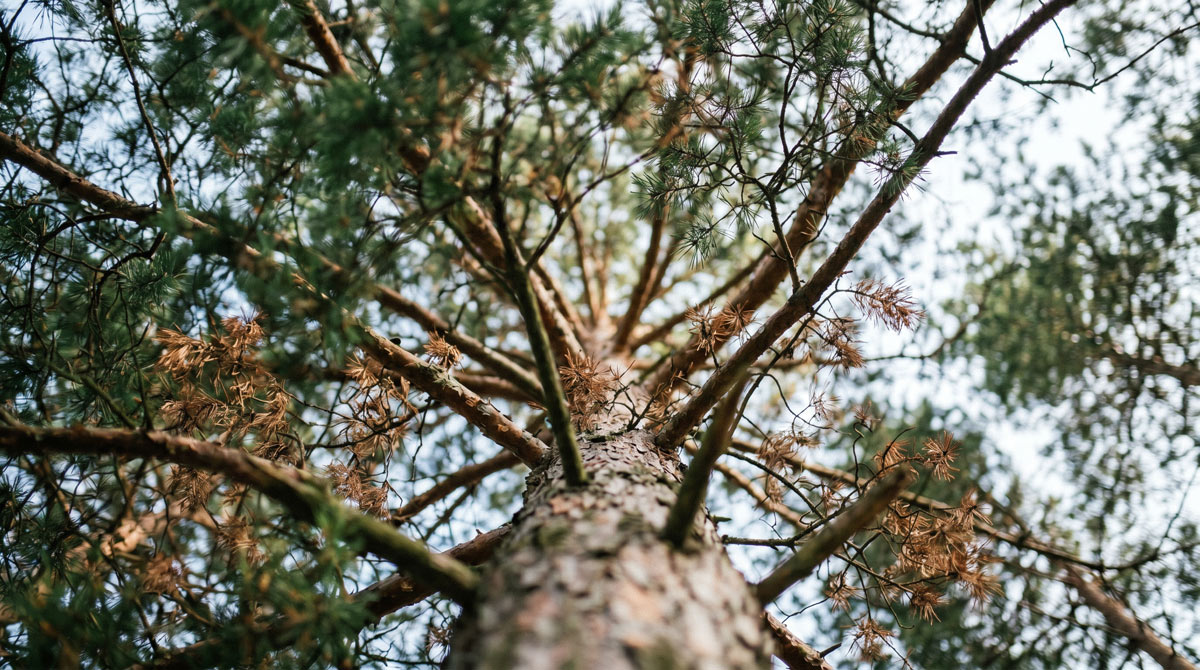
One of the first changes people notice is thinning foliage. A once-full canopy may suddenly look sparse, or entire branches may fail to produce leaves while neighboring branches remain green. Although seasonal leaf drop is perfectly normal for some species, unusual thinning often indicates stress.
Dead branches are another important warning sign. If branches become brittle, stop producing leaves, or begin dropping unexpectedly, your tree may no longer be sending nutrients throughout the canopy. Consequently, deadwood can become both a health concern and a safety hazard.
Cracked bark, peeling bark, or large wounds on the trunk should never be ignored. Healthy bark acts like protective skin, shielding the tree from insects, disease, and environmental damage. Once that protective layer is compromised, decay organisms can move inside the tree much more easily.
Not Every Dying Tree Needs to Be Removed
One of the biggest misconceptions property owners and managers have is that every declining tree must come down immediately. Fortunately, that simply isn’t true. In fact, many trees recover beautifully once the underlying issue is identified and corrected.
For example, a tree suffering from drought stress may improve dramatically after adjustments to its irrigation schedule. Likewise, a nutrient deficiency can often be corrected through proper soil management instead of expensive removal. Even certain insect infestations can be managed successfully when detected early enough.
At LC Tree Service, our goal is never to recommend removal unless it’s truly necessary. We believe healthy, mature trees add tremendous value to San Diego properties by providing shade, improving curb appeal, supporting local wildlife, and increasing property values. That’s why our Certified Arborists always begin with preservation whenever it’s a safe and practical option.
Why Early Diagnosis Makes All The Difference
Waiting is one of the most expensive mistakes homeowners can make when they suspect they have a sick tree. Small problems often become much larger if they’re ignored for months or years. Meanwhile, treatment options become more limited as decline progresses.
Early intervention can stop diseases before they spread throughout the tree. Likewise, correcting watering practices or relieving soil compaction can help roots recover before permanent damage occurs. Therefore, acting quickly often costs significantly less than waiting until removal becomes unavoidable.
A professional inspection also provides peace of mind. Sometimes a tree that appears unhealthy is actually going through a normal seasonal cycle, while another tree that looks healthy may have hidden structural defects. A San Diego certified arborist knows how to distinguish between cosmetic issues and serious health concerns, allowing people to make informed decisions with confidence.
How a Certified Arborist Determines Whether a Tree Can Be Saved
When homeowners call us about a dying tree, one of the first questions they ask is, “Can you save it?” The honest answer is that it depends on several factors. Every tree is different, and a proper diagnosis is the only way to know whether treatment is likely to succeed.
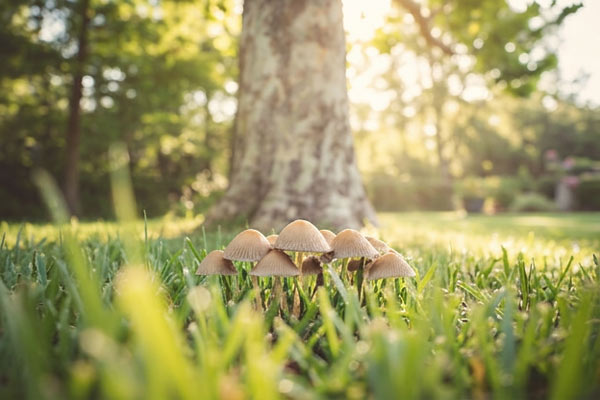
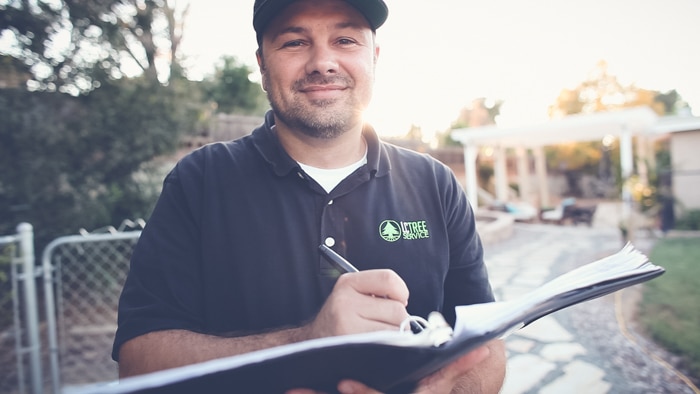
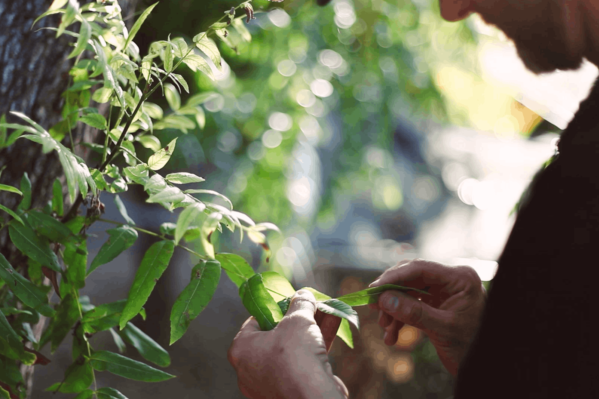
At LC Tree Service, our Certified Arborists begin with a thorough inspection rather than making assumptions from a distance. We examine the canopy, trunk, branches, root flare, surrounding soil, and overall structure. In addition, we look for signs of insects, fungal growth, decay, previous pruning damage, and environmental stress that may not be obvious to the untrained eye.
Just as importantly, we consider the tree’s species, age, location, and overall value to your property. A mature shade tree that has decades of healthy growth ahead may deserve a very different treatment plan than a severely compromised tree posing an immediate safety risk. Because of this, every recommendation is based og the individual tree instead of a one-size-fits-all approach.
Many Tree Problems Can Be Treated
One of the most encouraging things people hear is that many sick tree problems are completely treatable. Although every situation is unique, early intervention often gives a tree an excellent chance to recover. Therefore, scheduling an inspection as soon as you notice unusual symptoms is always a smart decision.
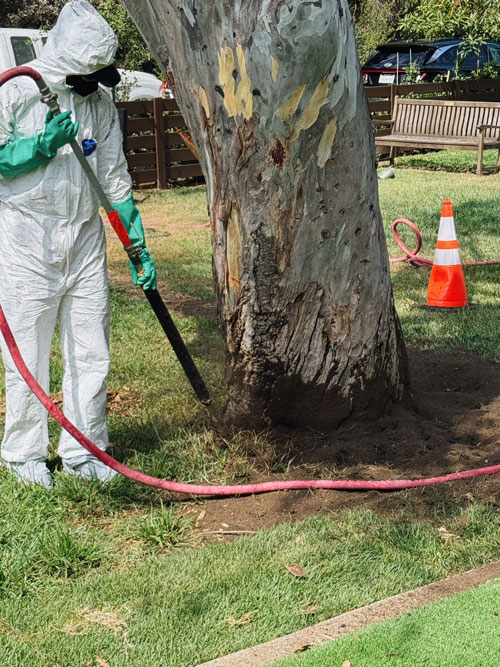
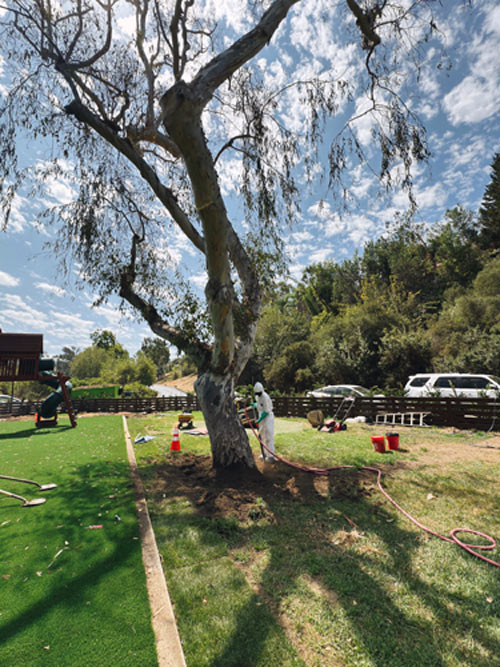
In many cases, treatment starts with correcting environmental stress. Adjusting irrigation schedules, improving drainage, relieving compacted soil, or applying mulch correctly can significantly improve root health. As the roots recover, the rest of the tree often begins to regain its vigor over the following months.
Other trees benefit from selective pruning to remove dead or diseased branches. Proper trimming helps reduce stress while allowing the tree to focus its energy on healthy growth. When performed by trained professionals, this process can also improve structural integrity and reduce future hazards.
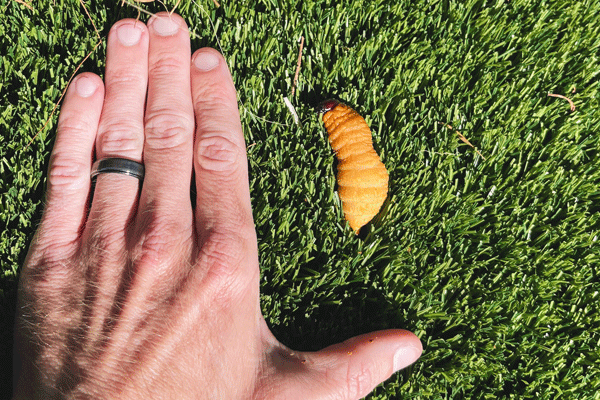
LARVAE
A South American palm weevil larvae found near a palm.
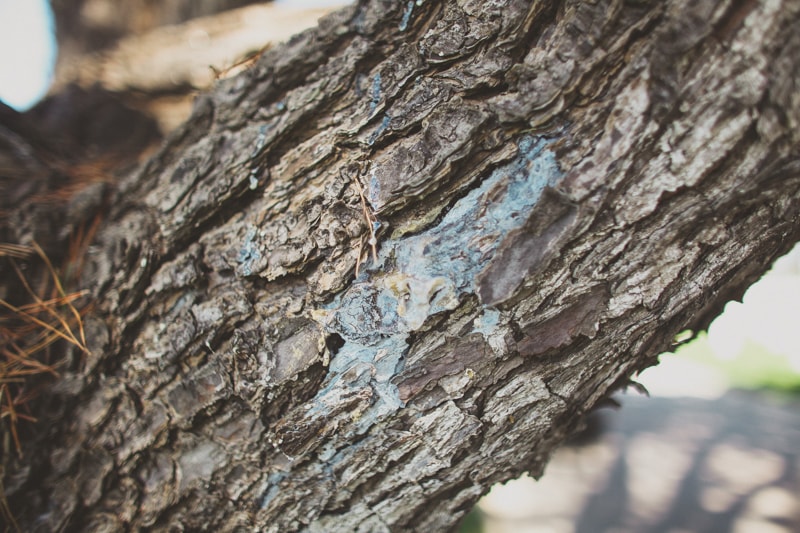
SAP
Unusual sap leakage is a sign of a bark beetle infestation.
Managing Insects Before They Cause Permanent Damage
San Diego residents are becoming increasingly familiar with destructive tree pests. While insects are a natural part of the environment, certain species can quickly overwhelm an already stressed tree. Consequently, identifying pest activity early is essential for successful treatment.
Certified Arborists know what signs to look for, including exit holes, boring dust, canopy thinning, an dunusual sap flow. Some insects attack healthy trees, while others primarily target trees that are already weakened by drought or disease. Understanding that difference helps determine the most effective treatment strategy.
Depending on the situation, treatment may involve improving tree health, targeted pest management, or removing heavily infested limbs before the infestation spreads. The goal is always to preserve the tree whenever doing so is safe, practical, and likely to result in long-term success.
Diseases Require Accurate Diagnosis
Tree diseases can be difficult ot identify because many produce similar symptoms. Brown leaves, branch dieback, cracked bark, and thinning canopies may all point to different underlying problems. Therefore, guessing at the cause often leads to wasted time and unnecessary expense.
Southern California trees can be affected by fungal diseases, bacterial infections, root rot, and cankers. And some diseases respond well to treatment, while others become progressively worse if ignored. The sooner a diagnosis is made, the better the chances of slowing or stopping the damage.
Our Certified Arborists focus on identifying the root cause instead of simply treating visible symptoms. By addressing the actual problem, we help homeowners avoid temporary fixes that fail to solve the issue over the long term.

Sometimes Removal Is The Safest Option
Although we always look for ways to preserve healthy trees, there are situations where removal is simply the safest recommendation. Safety must always come first, especially when a tree threatens people, homes, vehicles, or neighboring properties. Even a beautiful tree can become dangerous if its structural integrity has been compromised.
Extensive internal decay is one of the most common reasons removal becomes necessary. Likewise, severe root failure, large trunk cavities, major storm damage, or significant leaning caused by root movement can all increase the likelihood of failure. In these situations, delaying removal only increases the risk.
One thing San Diego locals appreciate about LC Tree Service is our honesty. We never recommend removing a tree simply because it’s easier or more profitable. If we believe your tree can be preserved safely, we’ll explain the available treatment options and help you make an informed decision.
The Cost of Waiting Can Be Much Higher
It’s understandable to hope that a struggling tree will recover on its own. However, delaying an inspection often allows problems to become more severe and more expensive to correct. Meanwhile, the tree continues to lose energy as disease, insects, or environmental stress take their toll.
A tree that could have been saved with relatively simple treatment may eventually require complete removal if intervention comes too late. In addition, declining trees become more hazardous over time as dead branches increase and structural weaknesses develop. Addressin problmes early protects both your investment and your family’s safety.
If you’ve noticed changes in your tree, trust your instincts and have it evaluated. Even if the news is good, you’ll gain valuable peace of mind. If treatment is needed, you’ll have the best opportunity to save your tree before permanent damage occurs.
Why Honest Recommendations Matter
San Diego property owners and managers deserve advice they can trust, especially when dealing with mature trees that have taken decades to grow. Unfortunately, not every tree service approaches tree health the same way. Some companies focus primarily on remvoals, while others may overlooks erious safty concerns.
At LC Tree Service, we believe every recommendation should be based on what’s best for the tree and the property owner. If a tree can be preserved safely, we’ll explain the treatment options and provide realistic expectations for recovery. If removal is truly necessary, we’ll clearly explain why and answer every question before any work begins.
That commitment to honesty has earned the trust of residents, HOAs, property managers, and companies throughout San Diego. We know that informed customers make better decisions, and our goal is to provide professional guidance you can feel confident about for years to come.