If you live in Poway, you already know one thing: fire season is not something to take lightly. Between the dry Santa Ana winds, long stretches without rain, and plenty of flammable vegetation, San Diego County homeowners face wildfire risks almost every year. And while the hills and open spaces around Poway make the area beautiful, they also create conditions where fires can spread quickly.
Fortunately, preparing your property for fire season does not have to feel overwhelming. With a little planning, regular maintenance, and some strategic landscaping, you can significantly reduce the risk to your home and property.
Plus, many of the same steps that improve fire safety also make your yard cleaner, healthier, and more attractive. That means you are not just protecting your property—you’re improving it too.
Here is how San Diego property owners can get their homes ready before fire season arrives.
START WITH DEFENSIBLE SPACE
First and foremost, creating a defensible space is one of the most important steps you can take to protect your home. Defensible space is the buffer between your home and surrounding vegetation that helps slow or stop the spread of wildfire. Think of a moat around a castle to slow down invaders, but that invader is a wildfire.
In California, where wildfires are prevalent, homeowners are legally required to maintain defensible space around structures. However, even if it weren’t required, it would still be one of the smartest investments you could make.
Generally, defensible space is divided into zones:
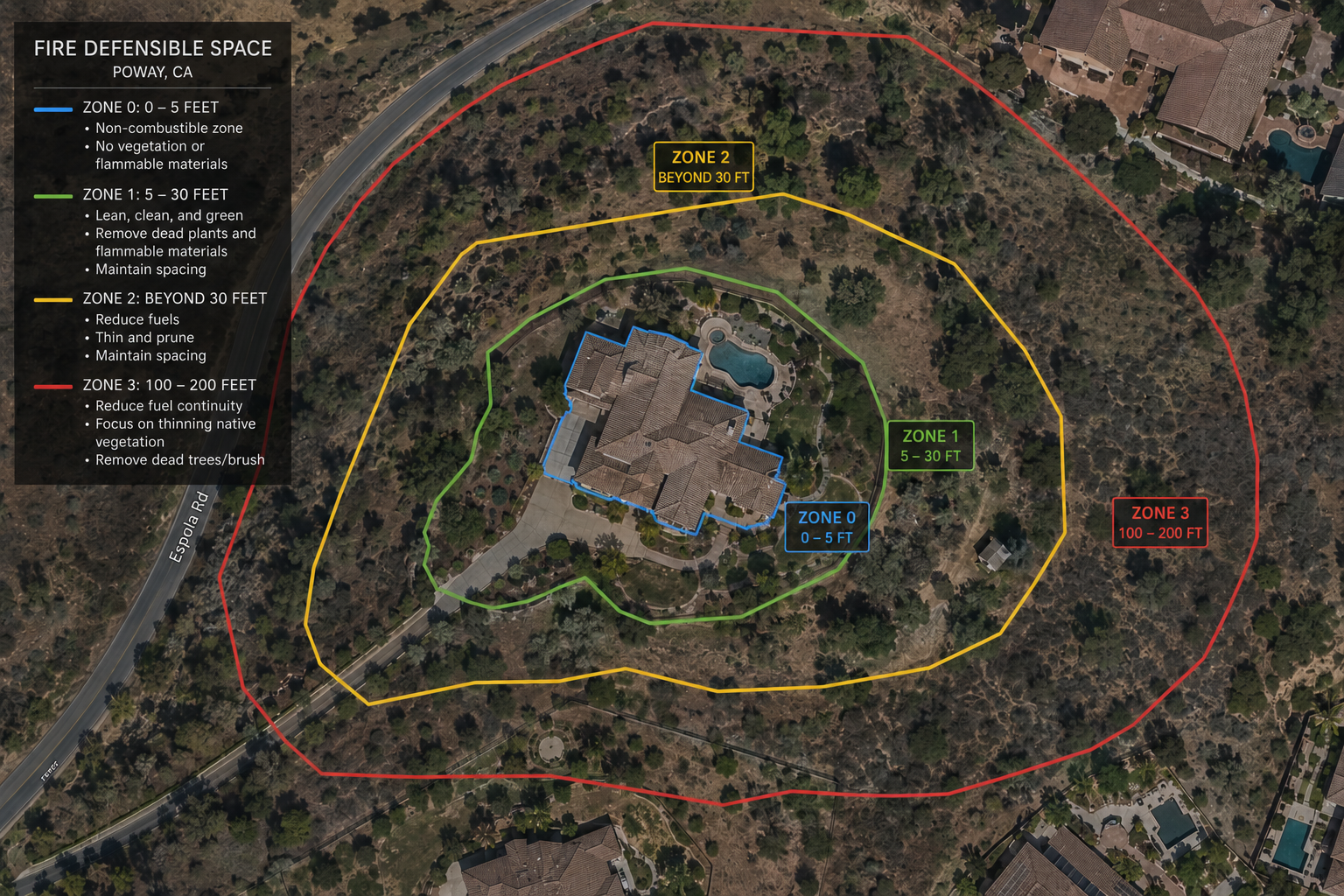
ZONE 0: THE IMMEDIATE AREA AROUND YOUR HOME
This area extends about 0 to 5 feet from your home and is considered the most critical zone.
Ideally, this space should contain as little combustible material as possible. That means removing dead leaves, pine needles, wood piles, dry mulch, and anything else that could ignite easily. You should also avoid storing patio cushions, cardboard boxes, or firewood against exterior walls during fire season.
It may seem harmless, but embers can travel surprisingly far in high winds. Instead, use gravel, pavers, concrete, or other noncombustible materials near the foundation of your home.
ZONE 1: THE LEAN AND GREEN ZONE
Next, the area from 5 to 30 feet around your home is the next most important zone to maintain.
Trees should be trimmed properly, grass should remain short, and shrubs should not be overcrowded. Remember, wildfire spreads quickly when vegetation acts like a ladder carrying flames upward. Consequently, trimming lower tree branches and increasing plant spacing can dramatically reduce fire intensity.
This is where professional tree maintenance becomes especially important, and LC Tree Service can identify hazardous branches, overgrown canopies, and unhealthy trees before they become fire risks.
ZONE 2: REDUCE FUEL SOURCES
Beyond 30 feet from the home, the goal shifts toward reducing heavy fuel loads and slowing fire movement.
Although this area can look more natural, it still requires maintenance—in an organized-chaos type of way. Dead trees, fallen branches, thick brush, and overgrown vegetation are required to be trimmed back and controlled to keep up with the city’s fire safety regulations.
Meanwhile, trees should have enough spacing between their crowns so that flames do not easily jump from one tree to another.
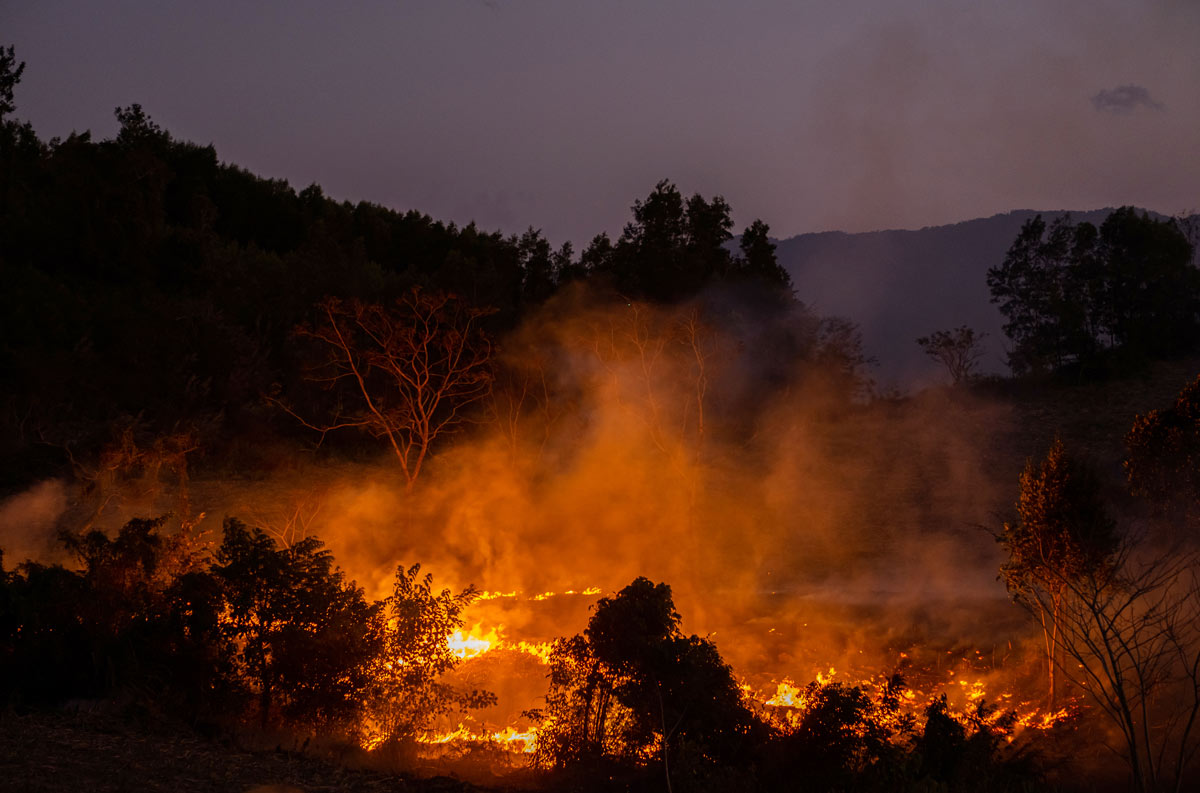
TRIM TREES BEFORE THEY BECOME A PROBLEM
Tree trimming is not just about aesthetics. In wildfire-prone areas like Poway, it is a major safety measure, since overgrown trees can spread fire rapidly, especially if branches hang over roofs, touch structures, or sit too close together. Furthermore, dead limbs act like dry kindling during hot weather. One stray ember can ignite them in seconds.
A professional Poway tree service, such as LC Tree Service, can help homeowners by:
- Removing dead or hazardous branches
- Raising tree canopies away from the ground
- Trimming branches away from roofs and chimneys
- Reducing excessive density within the canopy
- Identifying unhealthy or weakened trees
At the same time, proper trimming also improves airflow and tree health, making trees more resilient during drought conditions.
However, avoid excessive pruning, as over-trimming can stress trees and create additional problems. The goal is strategic fire prevention, not turning your yard into a barren landscape.
REMOVE DEAD VEGETATION AND YARD DEBRIS
Meanwhile, one of the simplest ways to improve fire safety is regular cleanup. The space six feet above the ground is the main area where fire travels during wildfires. That’s because dead leaves, dry grass, fallen palm fronds, and dead branches all act as the perfect fuel.
Unfortunately, many homeowners underestimate just how quickly these materials can ignite. It’s best not to wait until it’s too late. Therefore, it’s best to schedule routine yard maintenance throughout spring and summer rather than waiting until conditions become extreme.
Pay special attention to:
- Gutters filled with dry debris
- Under decks and patios
- Around fences and gates
- Near outdoor sheds
- Beneath trees and shrubs
In Poway, eucalyptus trees and palm trees often create large amounts of flammable debris. If you have either species on your property, regular cleanup becomes even more important.
Besides improving fire safety, a cleaner property also discourages pests and improves curb appeal. That is a win-win situation.

CHOOSE FIRE-RESISTANT LANDSCAPING
Contrary to popular belief, you do not need to remove every plant from your yard to create a fire-safe landscape. In fact, strategic landscaping can help slow the spread of wildfires while still keeping your property attractive.
The key is choosing plants wisely.
Generally, fire-resistant plants have higher moisture content and lower amounts of resin or oil. Native and drought-tolerant plants often perform well in San Diego landscapes when spaced appropriately.
Good options may include:
- California lilac
- Coral bells
- Agave
- Lavender
- Sage varieties
- Ice plant
- Succulents
On the other hand, highly flammable plants like juniper, dry ornamental grasses, and unmaintained eucalyptus should be monitored carefully.
Spacing also matters just as much as plant selection. Even fire-resistant plants can become dangerous if packed too closely together. As a result, homeowners should focus on creating separation between shrubs, trees, and ground cover.
INSPECT TREES FOR FIRE HAZARDS
Not all dangerous trees look dangerous. Sometimes, a tree may appear healthy while hiding internal decay, structural weakness, or drought stress. Why does this matter? Because during fire season, weakened trees can ignite more easily or fail during high winds. Therefore, routine inspections are essential.
A qualified Poway tree service, such as LC Tree Service, can evaluate:
- Deadwood accumulation
- Cracks or splits
- Leaning trunks
- Bark damage
- Root instability
- Pest infestations
- Drought stress
In Southern California, prolonged drought weakens many trees over time. Even mature trees can become vulnerable after several dry seasons. Stressed trees also drop more debris, thus increasing fuel around the property. So catching these issues early helps homeowners avoid larger problems later.
CLEAN YOUR ROOF AND GUTTERS
Although landscaping gets most of the attention, your roof can actually be one of the most vulnerable parts of your home during a wildfire. Wind-driven embers frequently land on rooftops and inside gutters. If dry leaves or pine needles are present, ignition can happen quickly.
Therefore, homeowners should inspect and clean roofs and gutters regularly during fire season.
Additionally, check for:
- Broken roof tiles
- Gaps in eaves
- Damaged vents
- Accumulated debris in valleys
- Bird nests near rooflines
Installing ember-resistant vents can also help reduce the chance of embers entering attic spaces.
While roof maintenance may not exactly be at the forefront of most people’s minds, it is one of the smartest fire prevention steps you can take.
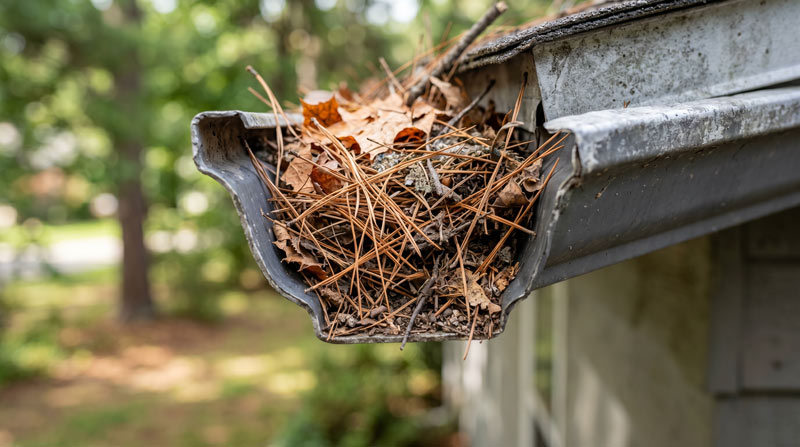
Cluttered rain gutters, such as this, make your home more susceptible to catching on fire. It is important to clean them before fire season, especially if tall, mature trees surround your property.
KEEP TREES AWAY FROM STRUCTURES
Many homeowners love the shade and beauty that trees provide near their homes. Unfortunately, trees that grow too close to structures can become major fire hazards. Branches hanging over roofs create direct pathways for flames and embers. Likewise, trees touching siding, fences, garages, or power lines increase the risk of fire spread.
Ideally, tree branches should remain at least 10 feet away from chimneys and rooftops whenever possible. And another preventative step that you can take is to make sure that your trees are spaced far enough to reduce canopy-to-canopy contact.
Professional trimming not only improves fire safety but also protects structures during storms and high winds. In other words, proactive maintenance today can prevent expensive damage tomorrow.
DO NOT FORGET IRRIGATION
Healthy, hydrated plants are generally less flammable than dry, stressed vegetation. Therefore, maintaining your irrigation system is an important part of fire preparation.
Check sprinkler systems regularly for leaks, broken heads, or uneven coverage. At the same time, avoid watering trees and shrubs too frequently, since deep, infrequent watering is more beneficial than shallow daily watering.
Drip irrigation systems often work well for San Diego landscapes because they conserve water while keeping plants healthier.
Additionally, mulching properly can help retain moisture in the soil. However, avoid highly combustible mulch materials directly around structures.
PREPARE FOR EMERGENCY ACCESS
Another overlooked issue during wildfire season is emergency access. Firefighters need clear access to properties, especially in neighborhoods with narrow roads or dense vegetation.
Therefore, homeowners should make sure:
- Driveways remain clear
- Trees do not block access routes
- House numbers are visible from the street
- Gates function properly
- Overhanging branches are trimmed high enough for emergency vehicles
If firefighters cannot easily access a property, response times may slow during emergencies. Although no one likes thinking about worst-case scenarios, preparation matters.
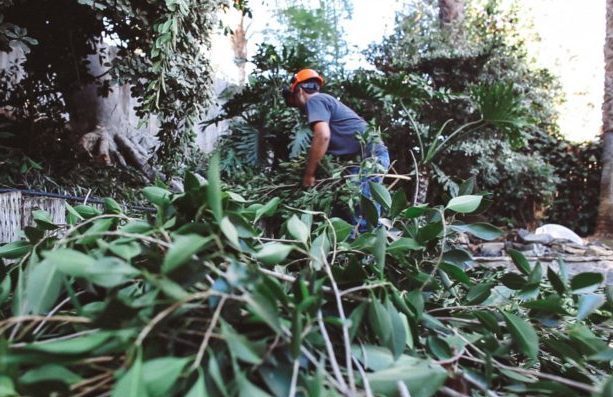
CREATE A REGULAR MAINTENANCE SCHEDULE
One weekend of cleanup is helpful, but fire prevention works best when it becomes part of your regular routine. Instead of waiting until temperatures rise, homeowners should maintain their properties year-round.
For example:
- Trim trees annually
- Remove debris monthly
- Inspect irrigation seasonally
- Check roofs and gutters regularly
- Monitor plant health throughout drought periods
Consistent maintenance prevents small issues from becoming fire hazards. Additionally, staying ahead of vegetation growth often saves money compared to major cleanup projects later.
WHY PROFESSIONAL TREE CARE MATTERS
When it comes to protecting your property during wildfire season, having the right team on your side makes all the difference. LC Tree Service proudly helps homeowners throughout Poway and San Diego County with professional tree trimming, hazardous tree removal, defensible space clearing, and ongoing property maintenance designed to reduce fire risk and keep landscapes healthy year-round.
Whether your trees need seasonal pruning or your property needs a full fire-prevention cleanup, our experienced crew is ready to help. Contact LC Tree Service today to schedule your estimate and get your Poway property prepared before the peak of fire season.